
Witty Wolf · 2026
The site you are reading is the case study
The portfolio itself: a Framer template retired in favour of an Astro site built with AI, directed by me. Same copy soul, new vessel, every call mine.
In short
A template can host your work, but it cannot speak for you.
A static Astro site in the field-notes direction, AI-developed with me directing; every detail this case describes is live on the page you are reading.
- Astro, built with AI, template retired
- Static
- Typefaces, both self-hosted
- 2
- Accent colour, spent carefully
- 1
The old portfolio lived in a Framer template. It did the job the way a rented flat does: everything works, nothing is yours. The copy was worth keeping; the platform was a monthly bill.
The vessel problem
Someone else’s vessel
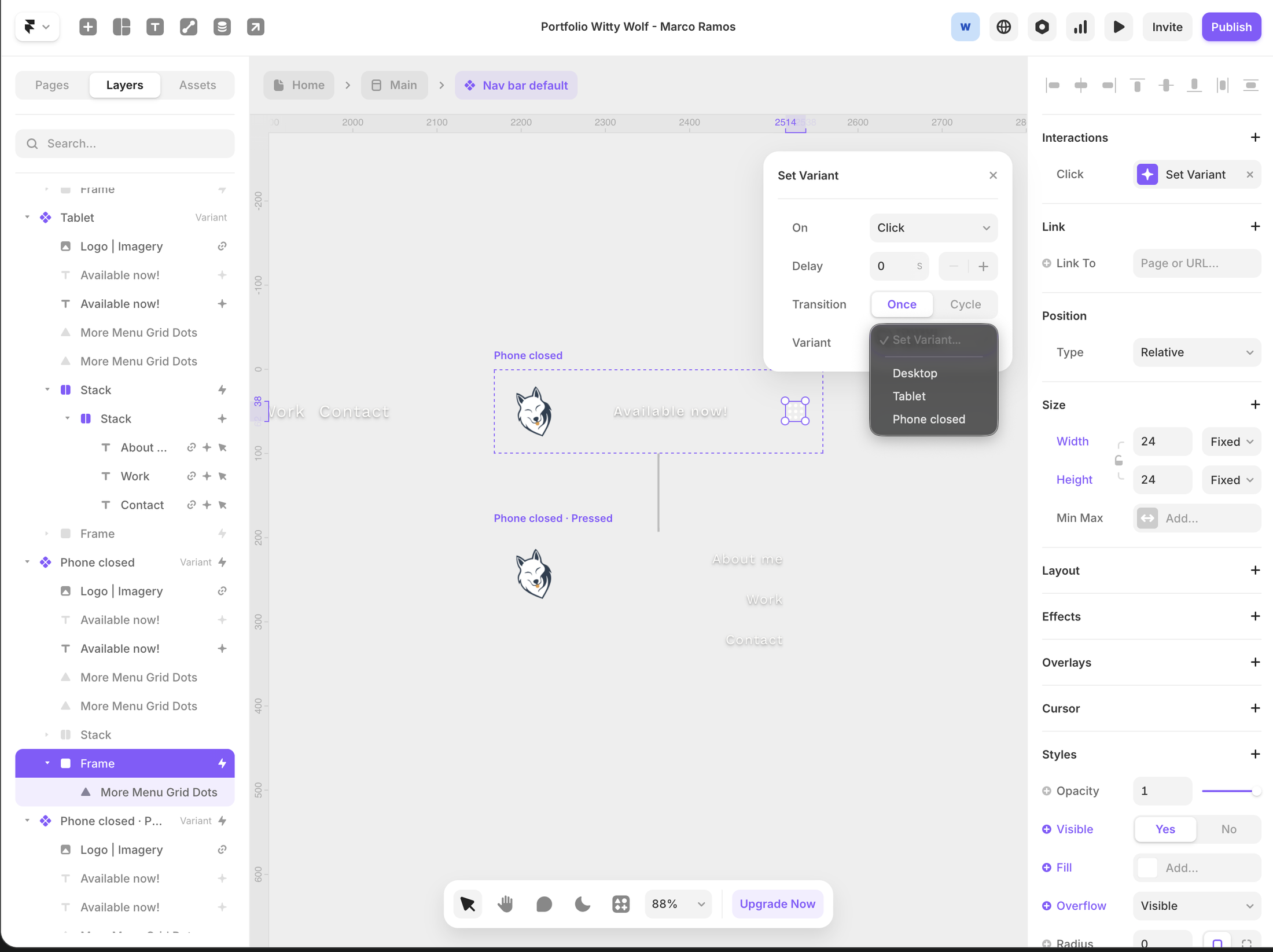
The Witty Wolf site began as a template full of stock. My own Houthavens sunset sat in the hero, but the work page opened on a 3D render from a photo library and contact hid behind a city skyline that could have sold anything. Under it sat a wordmark in a rounded display face that has since been retired from the brand entirely.
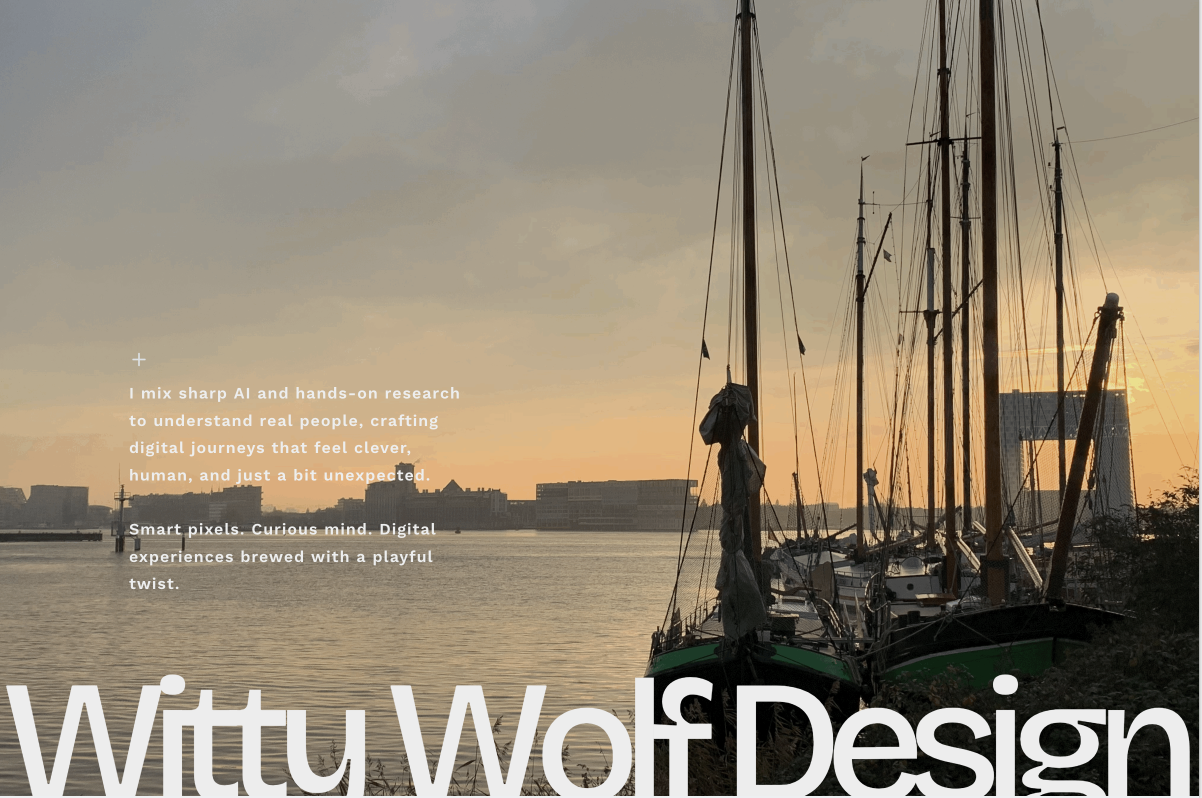

So I redesigned it inside Framer: my own imagery instead of the stock, the rounded face dropped, a statement in the hero and a proper light and dark theme.
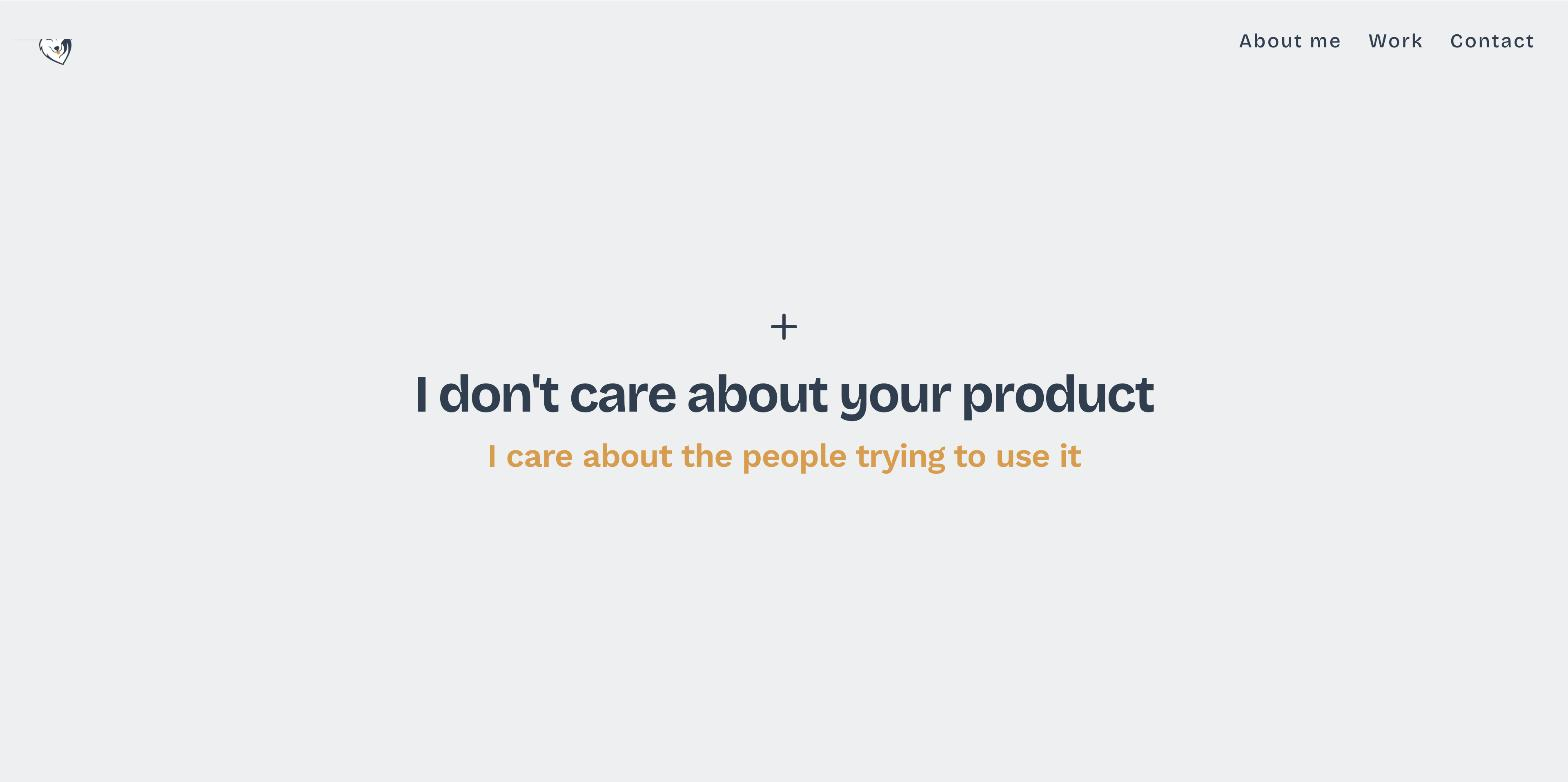
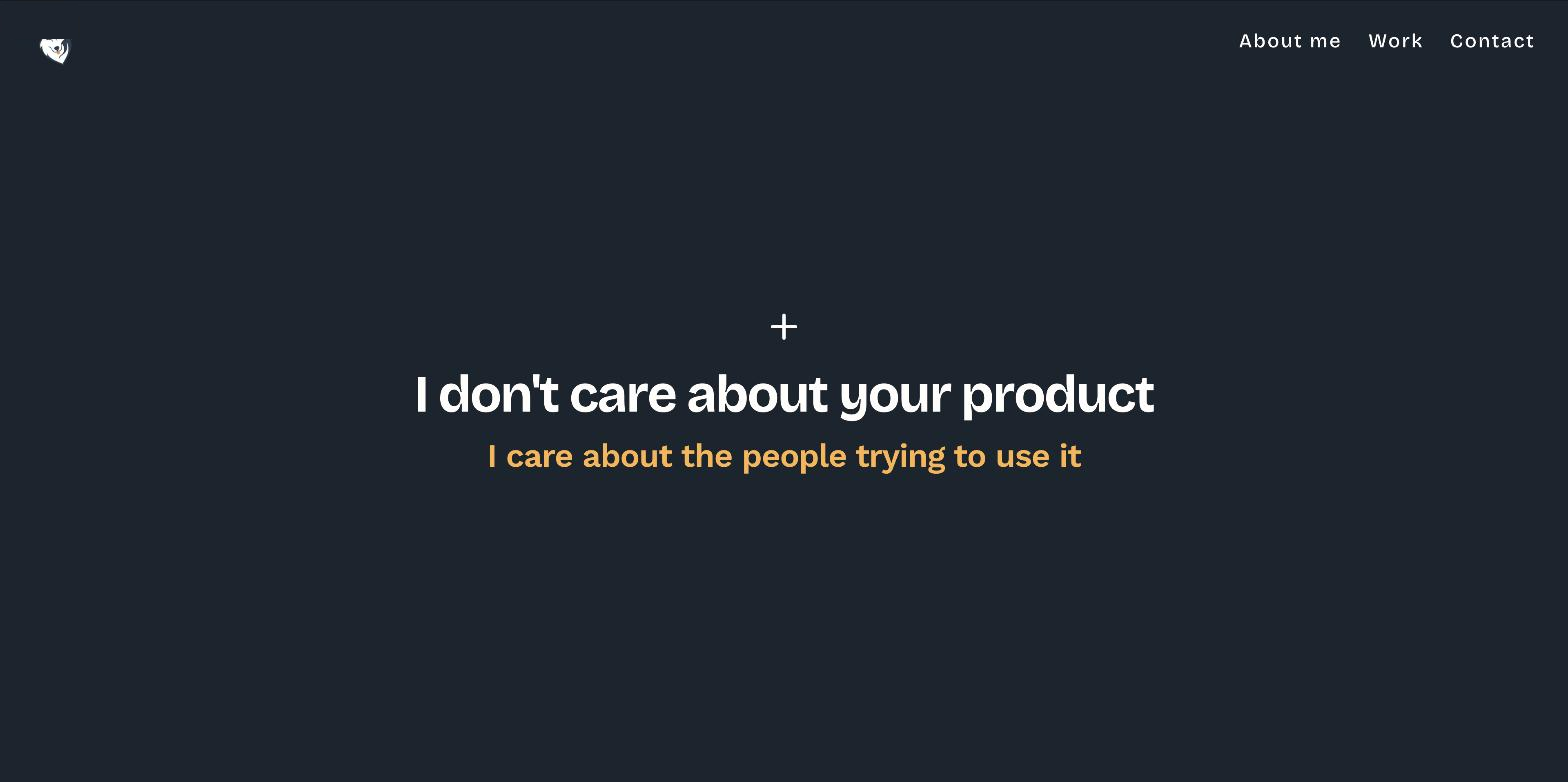
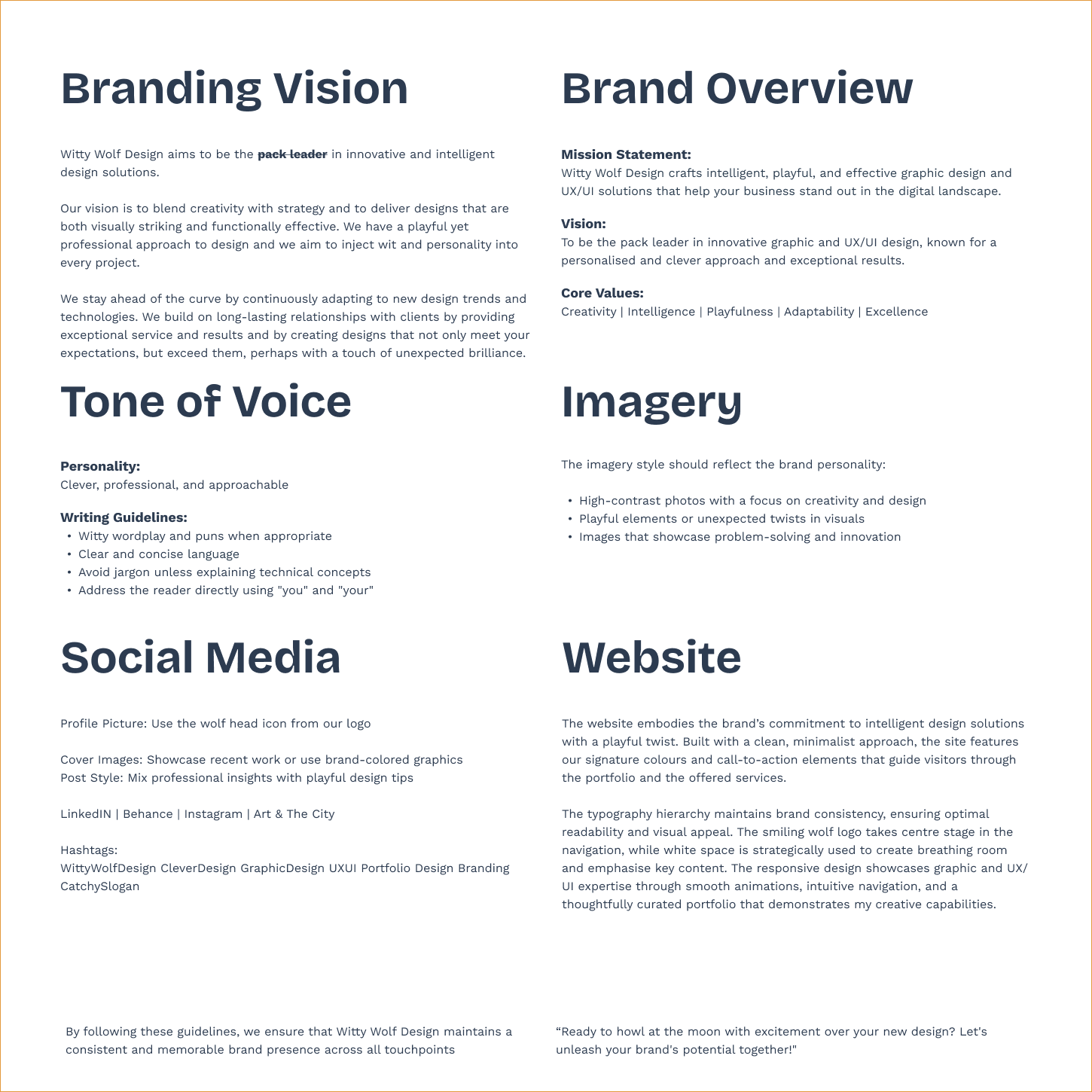
The brand thinking was real and worth keeping: wit as a working principle, plain language, personality in service of clarity. What it could not get from Framer was ownership.
The move
Same soul, new vessel
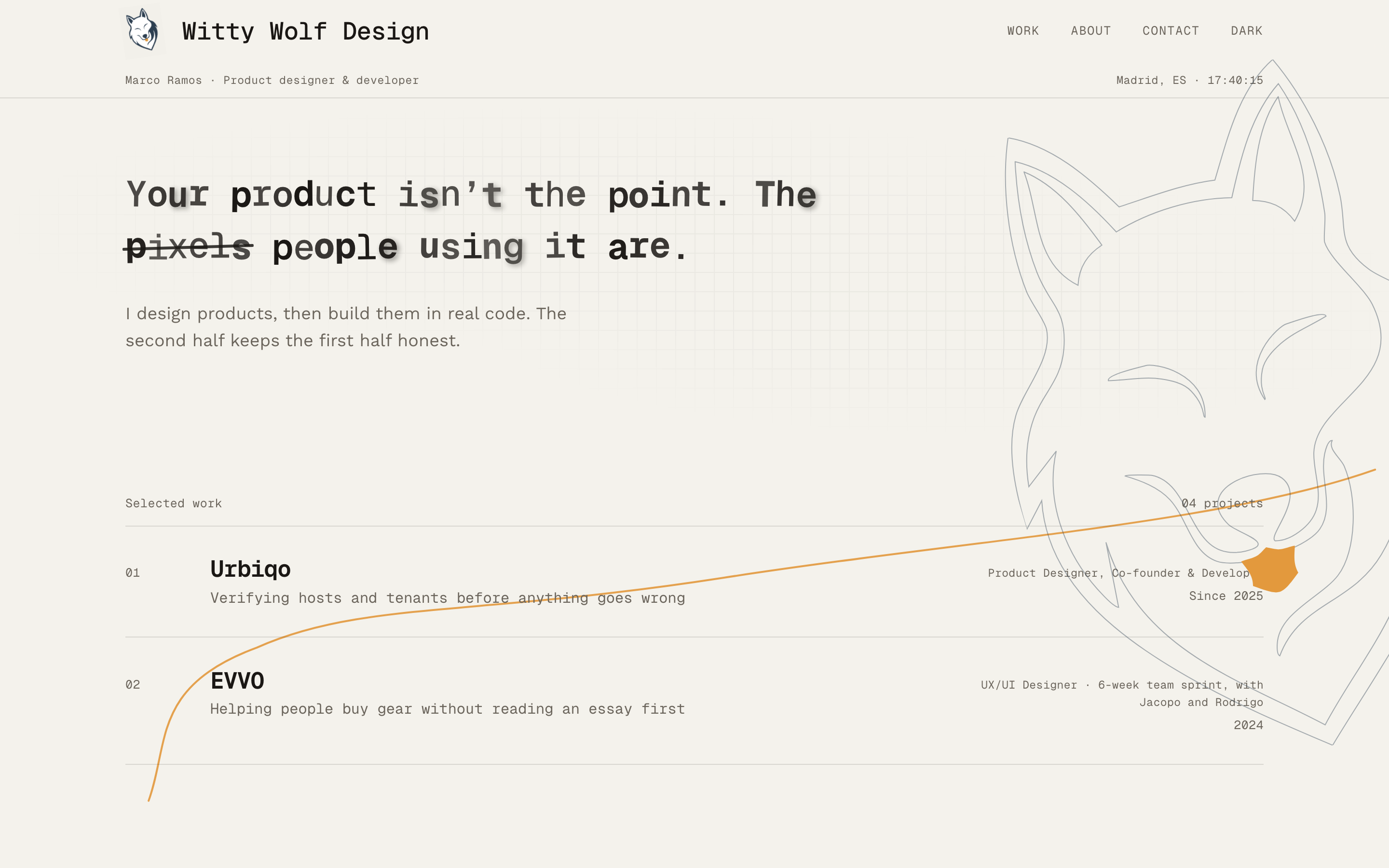
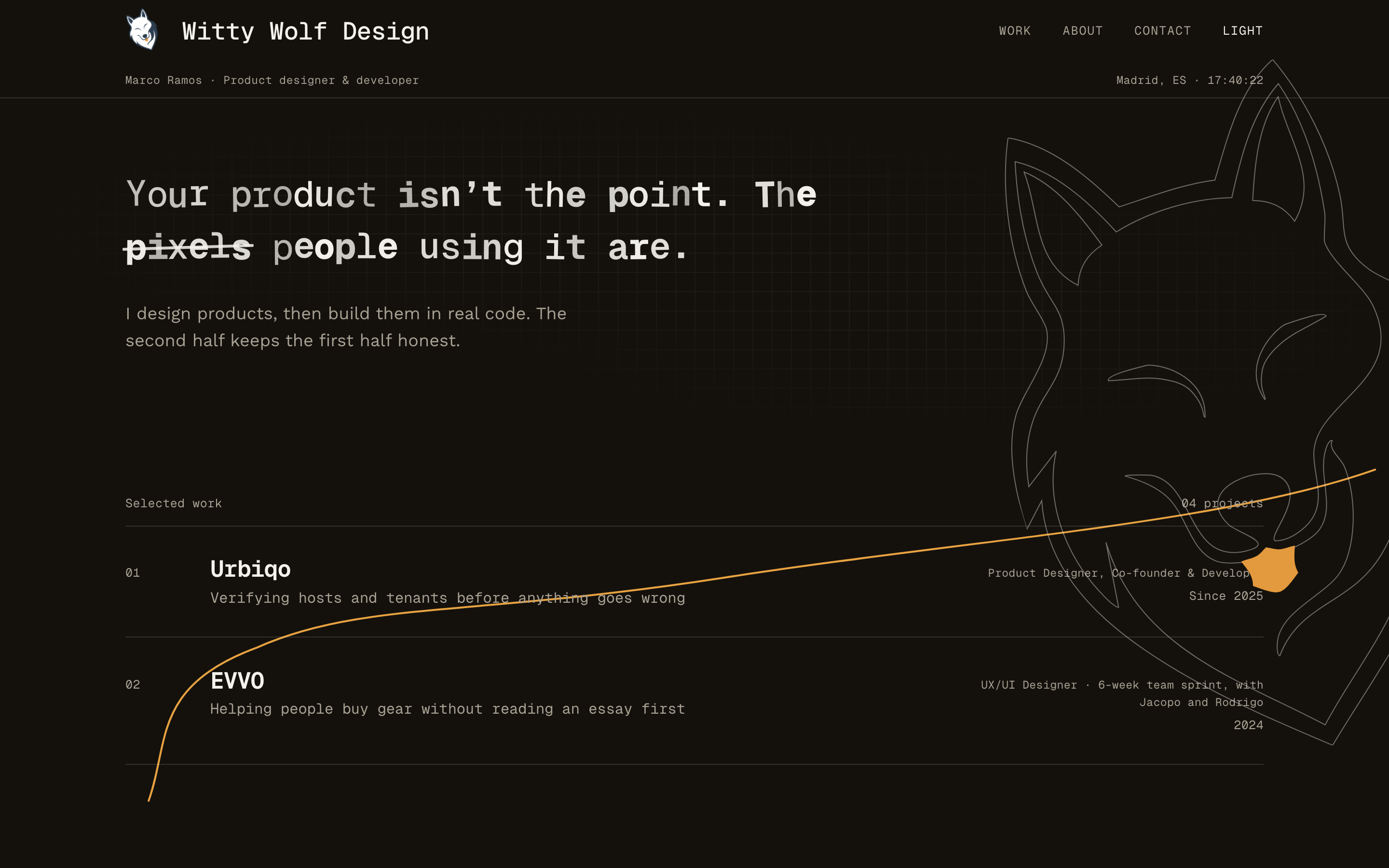
The decision was to retire the Framer template and build a static Astro site, AI writing the code, me directing it: keep the copy’s voice, replace everything it stood on. The art direction became field notes: warm paper, ink, a faint guide grid, thin line work and one amber accent, spent carefully. Two typefaces, both self-hosted: Geist Mono as the voice for headings, navigation, labels and numbers, Work Sans for long-form reading only. The old rounded display face was retired everywhere, including the brand itself.
The build ran the same way: AI wrote the code, I directed it. Every component was briefed, reviewed and sent back until it behaved, and every decision this case describes, from the typewriter’s mistake to the wolf’s spook, was mine.
01 · The craft
Details that earn their keep
This site’s hero types itself, makes a deliberate mistake, strikes it through and carries on: pixels becomes people. The wolf beside it is the real logo drawn as stroke-only line art that sketches itself in, no fills except the amber tongue. An amber scent trail draws down the page as you scroll, a live clock keeps Madrid time in the meta line and the footer answers in terminal. Dark mode arrives without a flash of the wrong theme, honours the system preference, and flipping it plays one short sequence: the wolf leans in, trembles, flashes an amber eye, then the lamp flickers and the theme switches. Every animation is disabled when reduced motion is on.
02 · The system
One source of truth
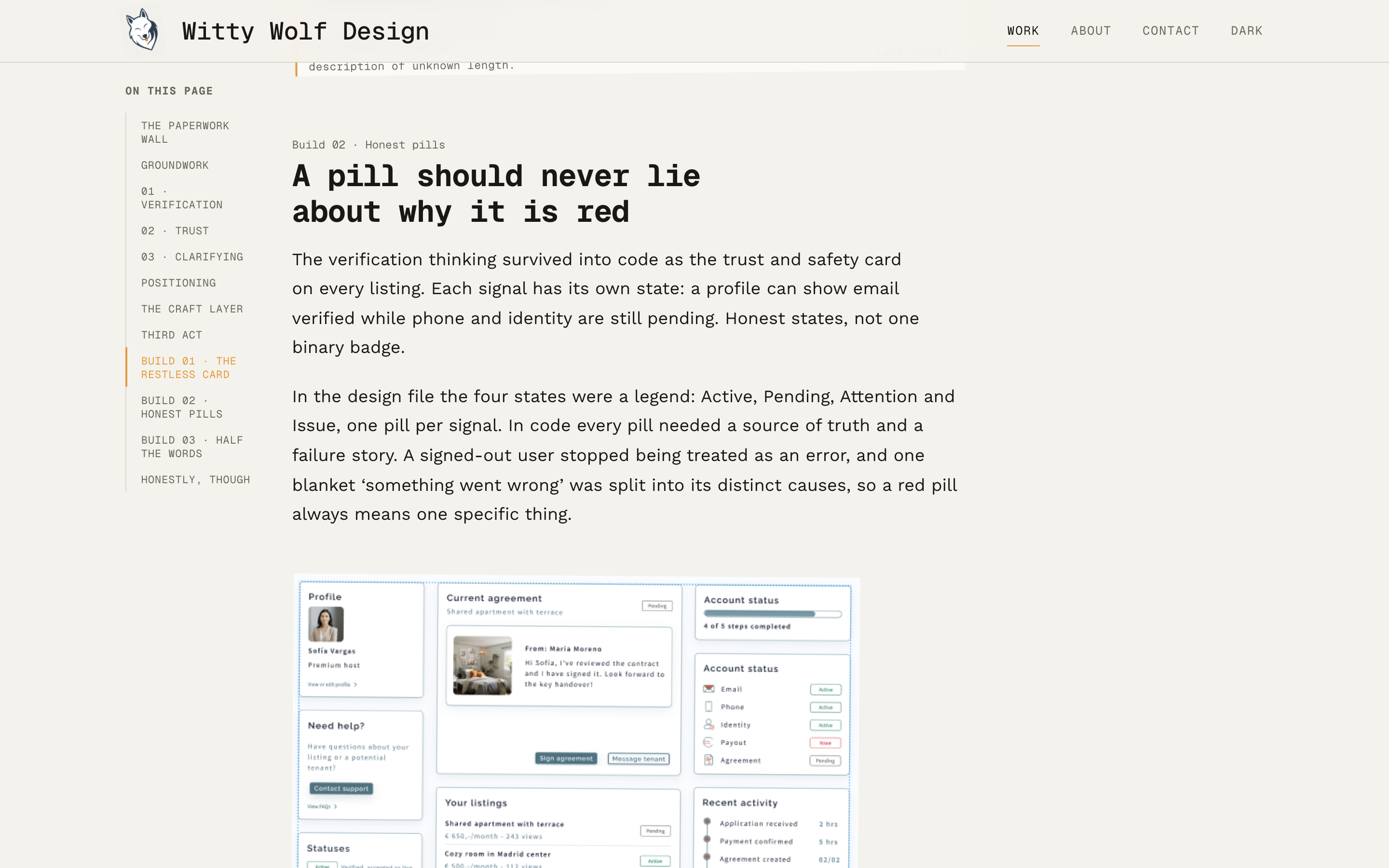
This site’s case pages run on a small system. The margin labels on this page are the single source of truth for the section index: the scroll-spy rail on desktop, the floating pill on mobile and the anchor links that keep working with JavaScript off, stamped in at build by a rehype plugin. Figures share one field-notes treatment, tape and pins for images only, never for type. Each case opens under a rubber stamp of its client’s mark, punched in after the title finishes typing.
My worst client
I am my worst client
Shipping for yourself means answering to your own critical self, and mine is the hardest client I have: there is no brief to hide behind and nobody else to blame. A showcase also keeps you restrained, because the design has to stay out of the way of the work it presents.
The Framer site took nearly four months. Most of that was deciding rather than building: what to show, what to cut, which images deserved a place, where the balance sat. This rebuild went faster because those decisions were already made. What remained was cutting, both the excess and a few things I was still attached to.
Criticism from a client or an employer is easier to take than my own. I am merciless when reviewing my own work, and the polish on this site comes out of that.
Use of AI
Use of AI
The code was AI-written from start to finish, with me directing every step; that story is above. The words are the exception: every text on this site is written by hand, most of the hours go into them, and I want it that way. The brand lives in a skill file that teaches the AI the house style once, tone, type, the wolf’s rules, so no session starts from zero. The rebuild took days rather than months, because the thinking was already done and the code was the fast part.
Honestly, though
The most honest test there is
A portfolio has no conversion numbers worth quoting, so I will not invent any. The outcome is ownership: every line of this site is mine to change, and a change takes minutes, not a support thread. Urbiqo taught me that building your own design is the most honest usability test there is. This time the client was me, and I notice everything.