
Case Study · UX/UI & Product Design
Urbiqo: Fixing trust issues
How excluded tenants and risk-averse hosts end up on the same platform
Status
Product designer (UX/UI)
End-to-end: research, problem framing, flows, system design, visual design
4 months
Trust & transparency
Context & challenge
The context:
Madrid's rental paradox
Madrid is booming, yet the rental market is constrained. Outdated filters like permanent contracts fail to recognise modern realities. This locks out solvent tenants and leaves hosts with a limited, homogenised pool of candidates.
The challenge:
The paperwork wall
Freelancers and expats face closed doors. An estimated 70% of solvent applicants are blocked simply for lacking a standard payslip. Hosts are trapped too, as they rely on rigid paperwork to mitigate risk rather than verifying actual trust.
The objective:
Designing for trust
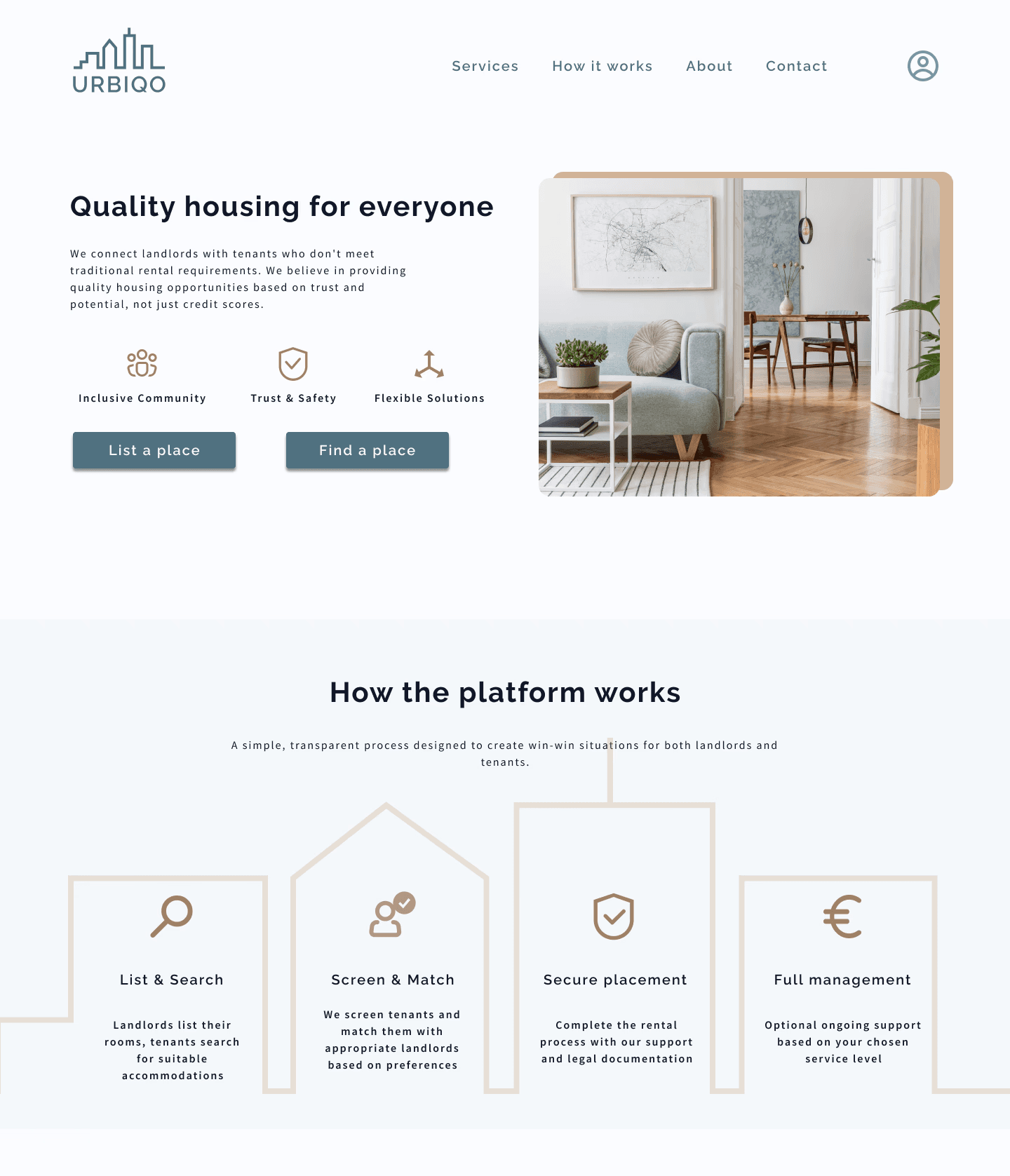
The aim is to replace paperwork with verifiable trust signals, so hosts can decide on actual evidence and solvent non-traditional tenants can get through the door.
Mapping the full journey
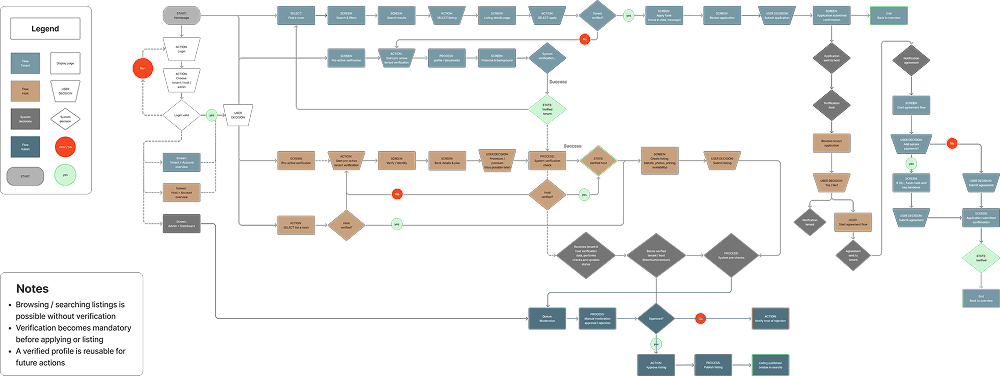
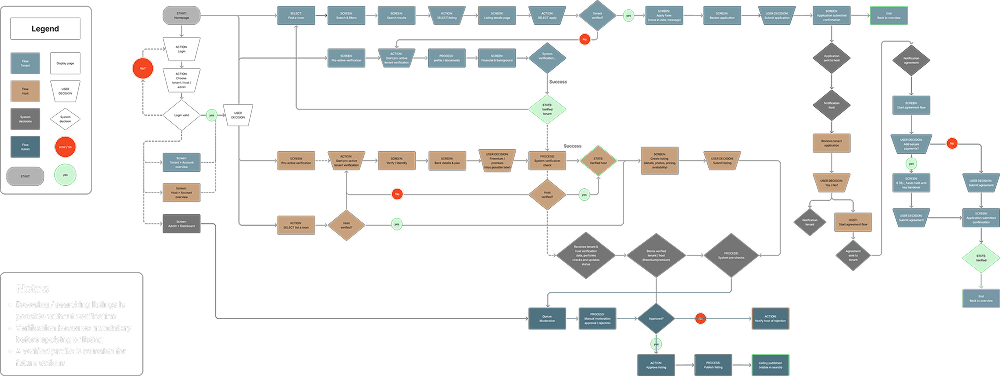
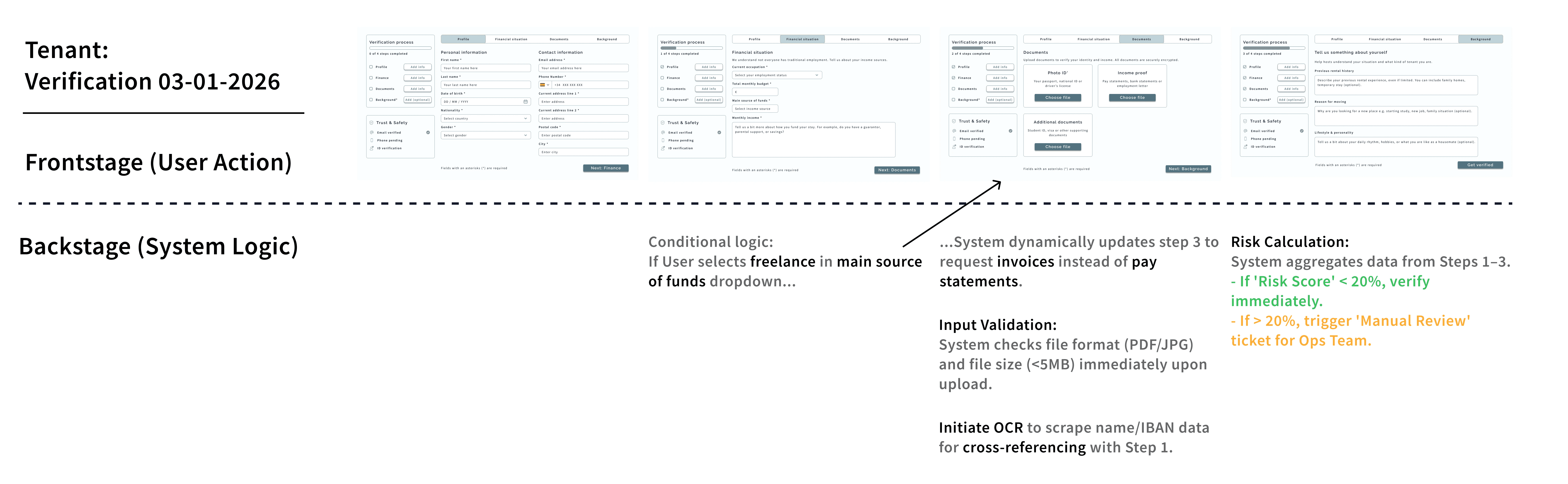
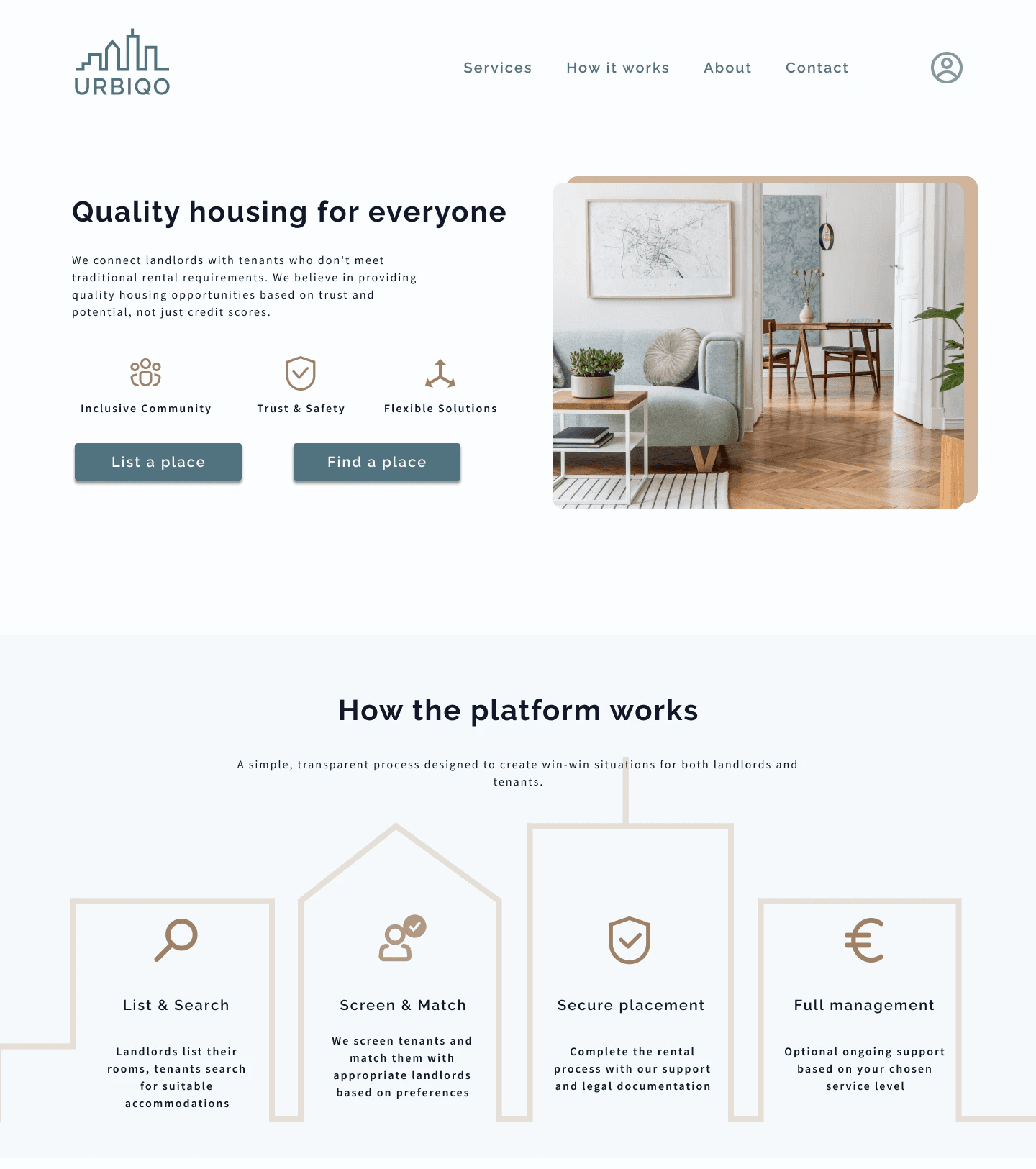
Before designing any screens, I mapped the complete user flow for both tenants and hosts, covering every decision point from first login through verification, application and payment. This became the source of truth for prioritising which screens to design first. The flow also fixed three rules the rest of the product had to honour: browsing stays open without an account; verification becomes mandatory at the point of applying or listing; a verified profile is reusable across applications.
User flow
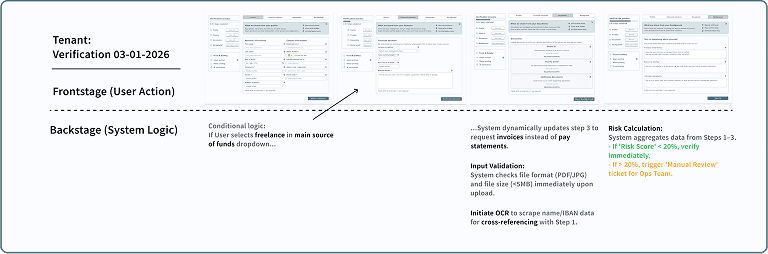
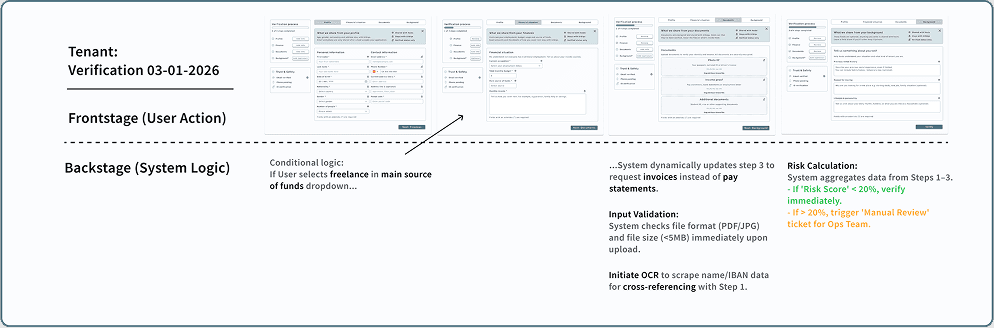
Swim lanes
Two sides, one problem

The tenant
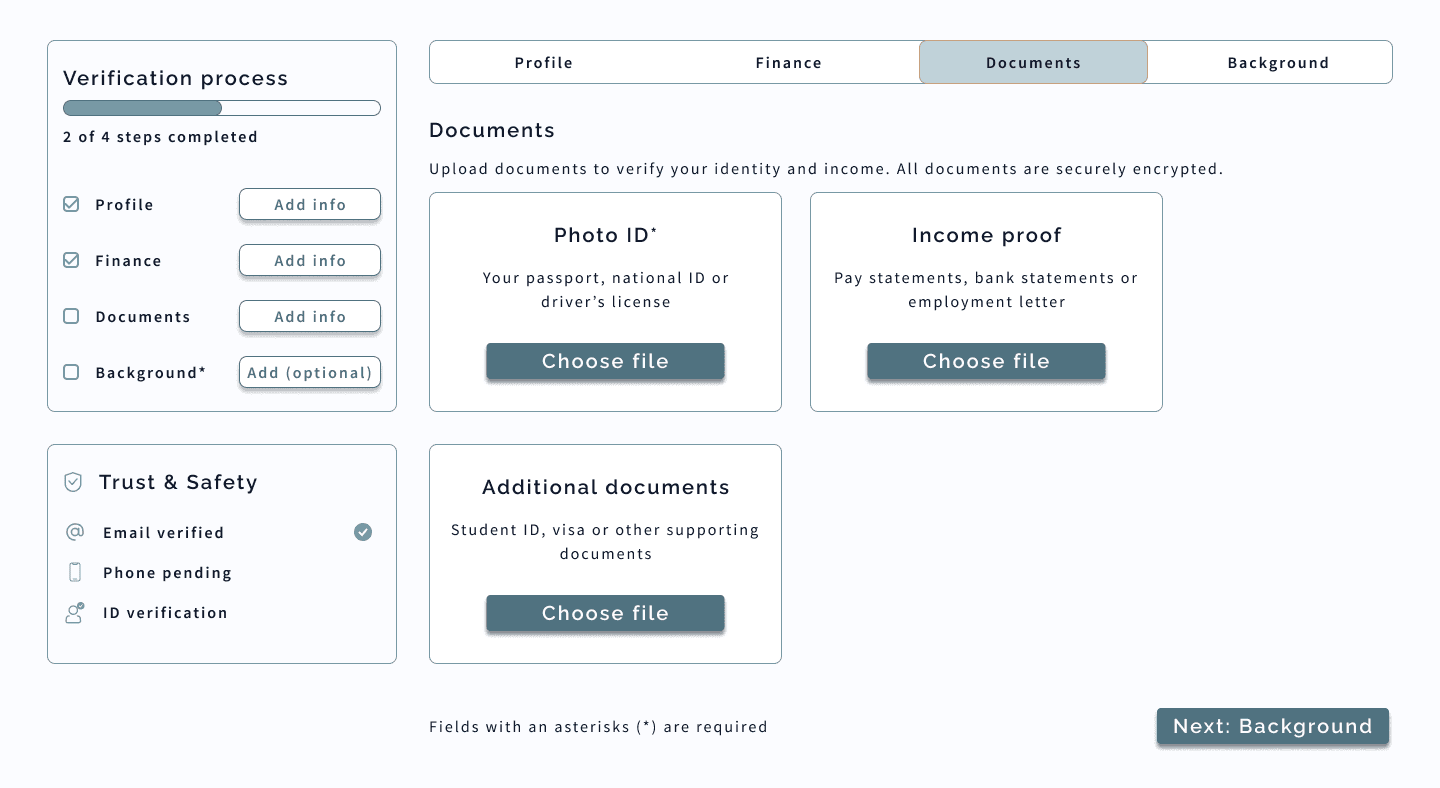
he freelancer or expat with stable annual income but no fixed monthly contract. Stalls at the upload screen because the form expects a payslip they don't have. Needs the system to read alternative proofs as legitimate evidence.

The host
Has to weigh the cost of an empty month against the cost of an unpaid month. Uses rigid paperwork as a proxy for reliability because nothing better is on offer. Needs a signal that doesn't filter out good tenants for the wrong reasons.
The difference
Validating reliability, not just salary.
02
Trust
Humanising the transaction
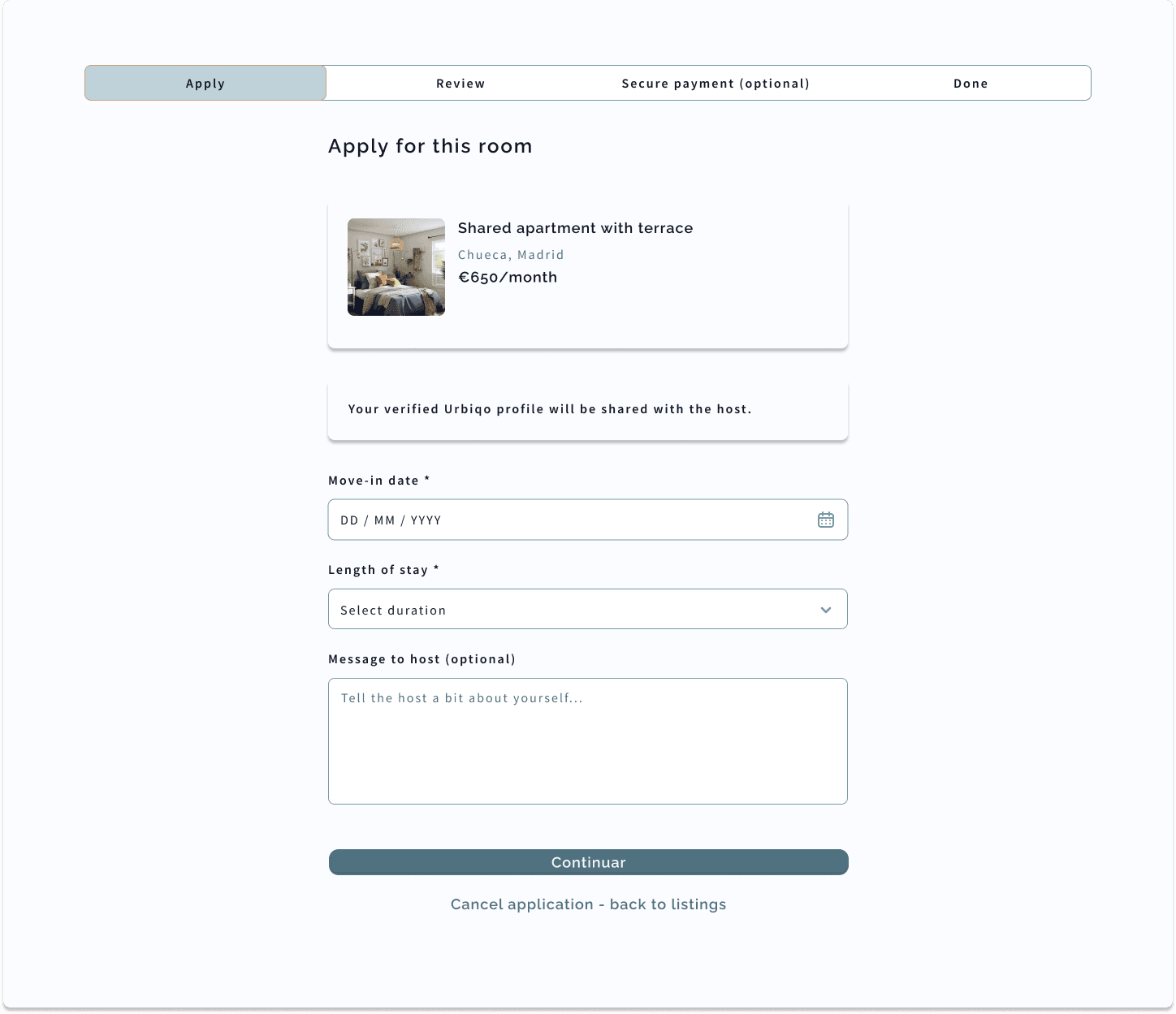
A verified Urbiqo profile is shared with the host before any meeting. Both sides see the same verification card: email, phone, ID and background check. Hosts also declare their relationship to the listing (owner, tenant or intermediary), so applicants know who they're dealing with. Trust starts visible, on both sides, before anyone schedules a viewing.
Verified profile
Mutual verification
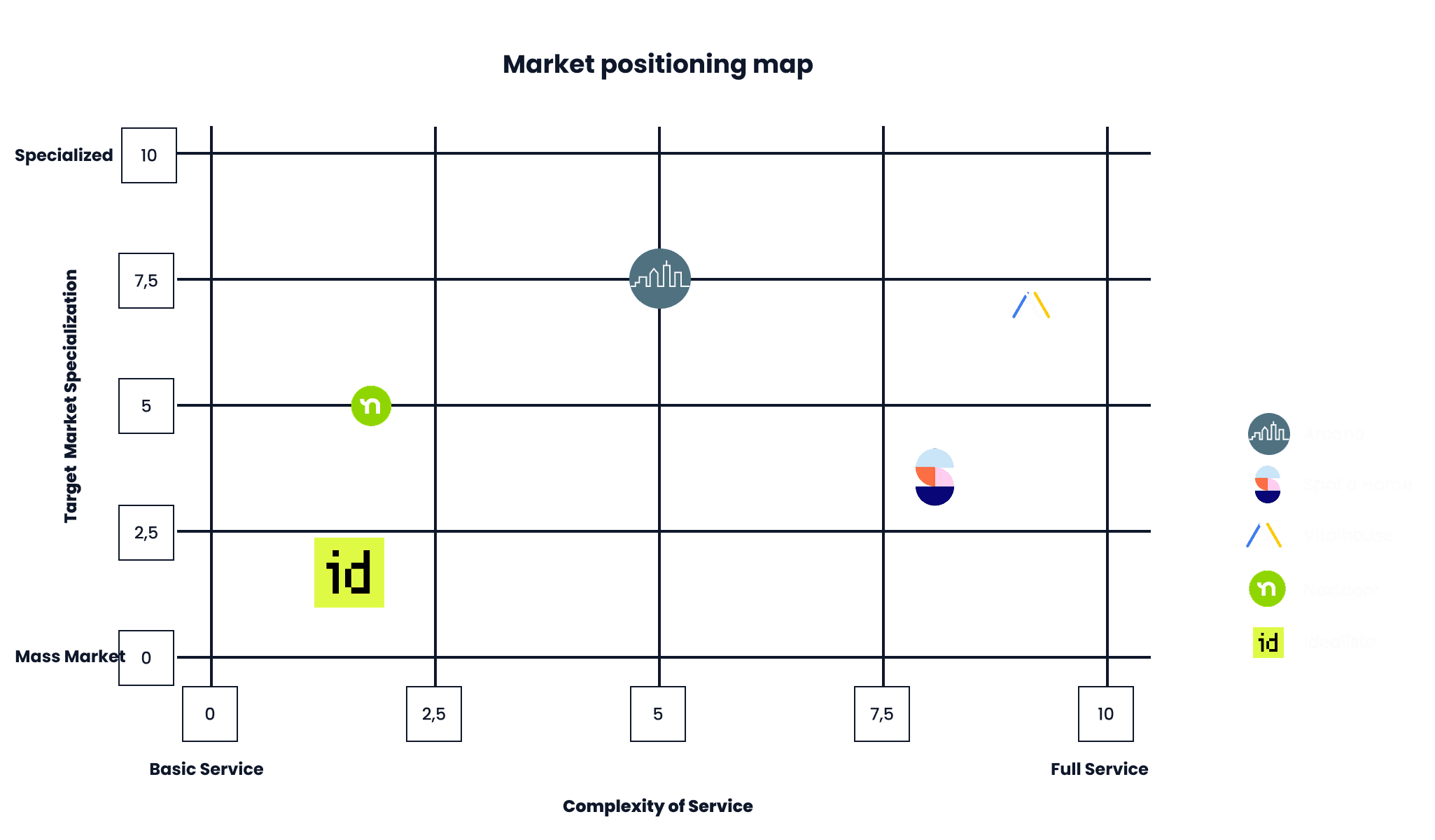
Where Urbiqo sits
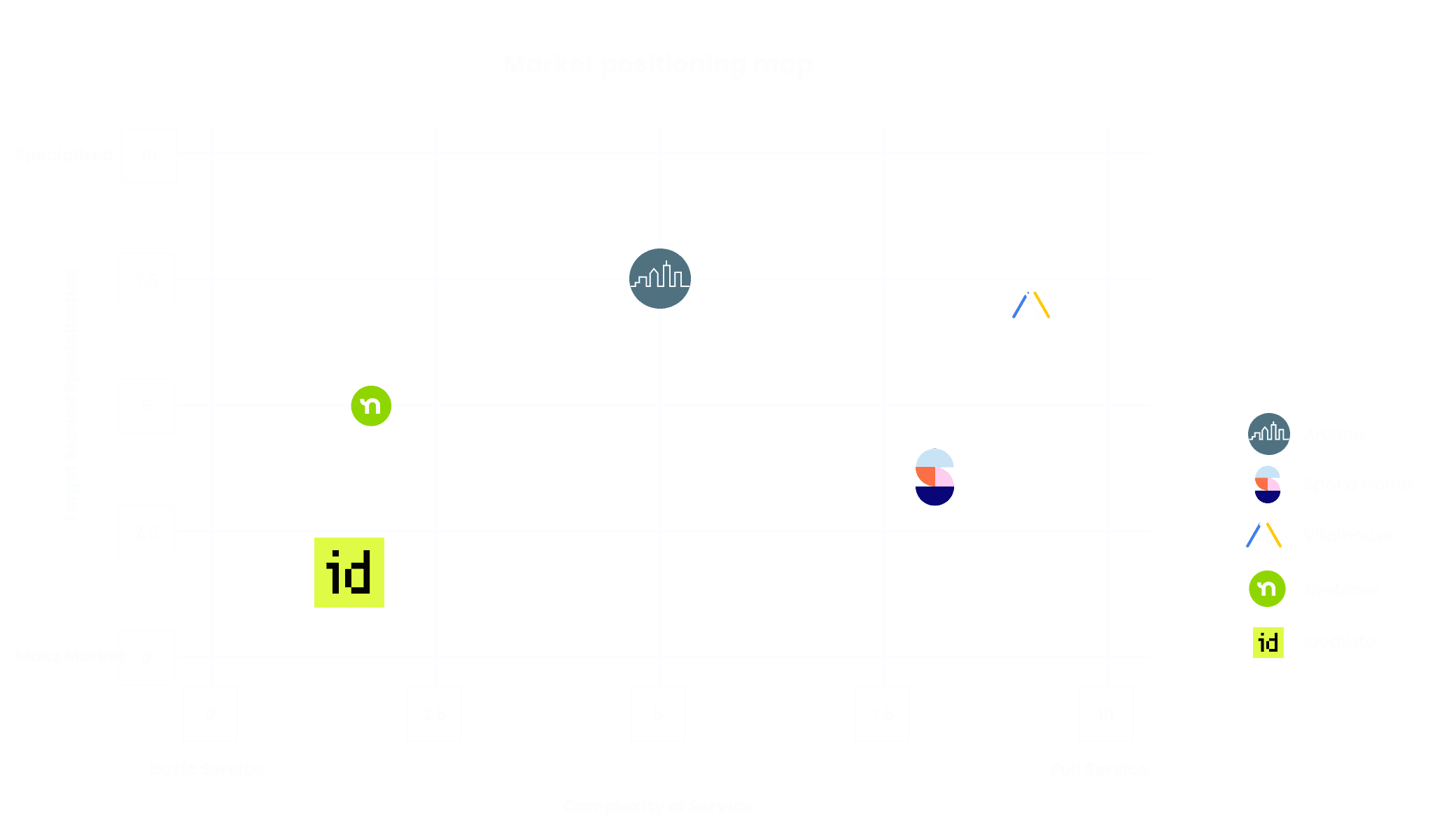
I mapped the Madrid rental market across two axes: complexity of service and target market specialisation.
The gap was that no platform combines trust-based verification with accessible pricing for freelancers, expats and non-traditional tenants.
Market positioning
Competitive landscape
Built for trust
Behind the screens
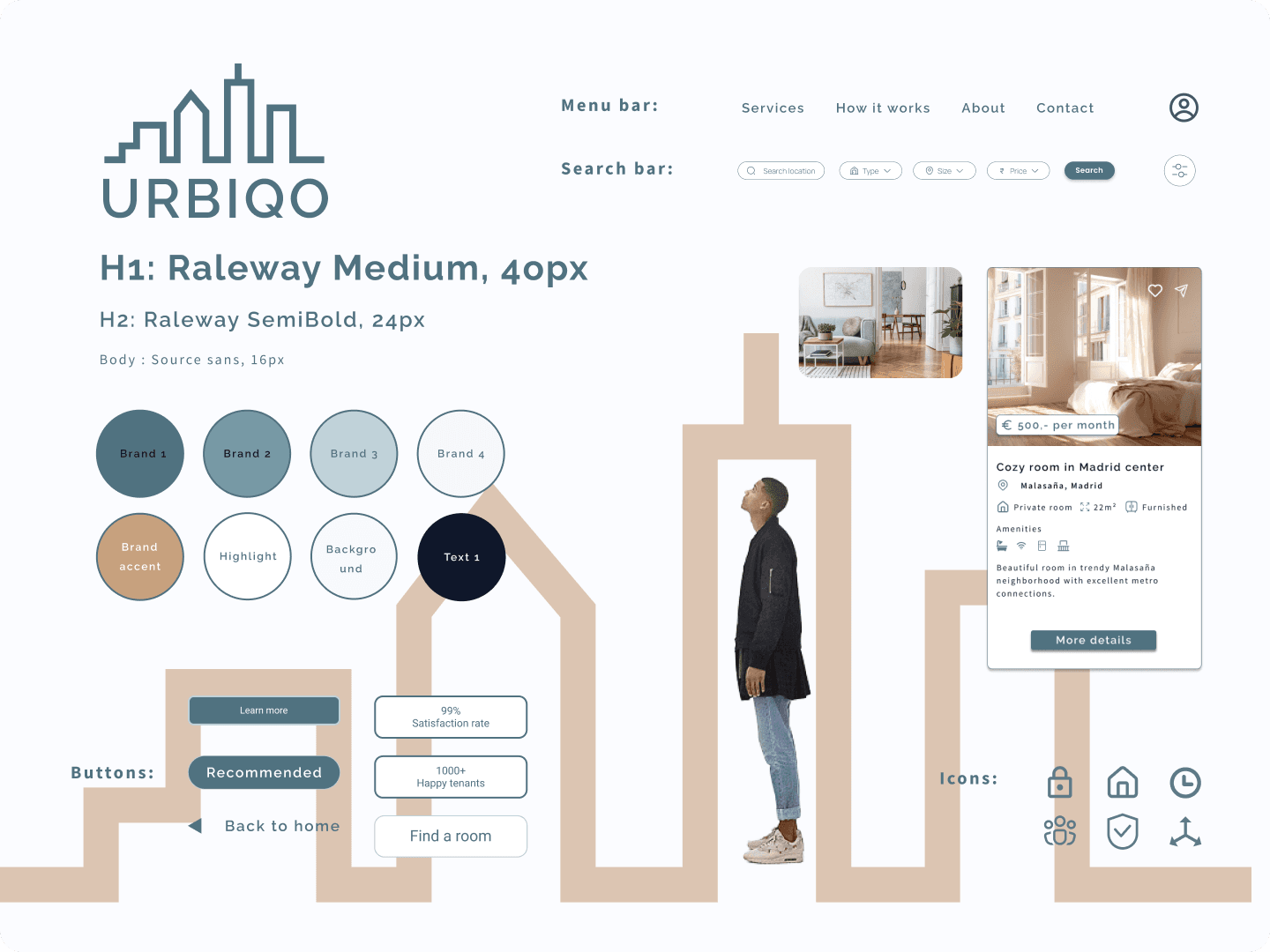
The system underneath the product.
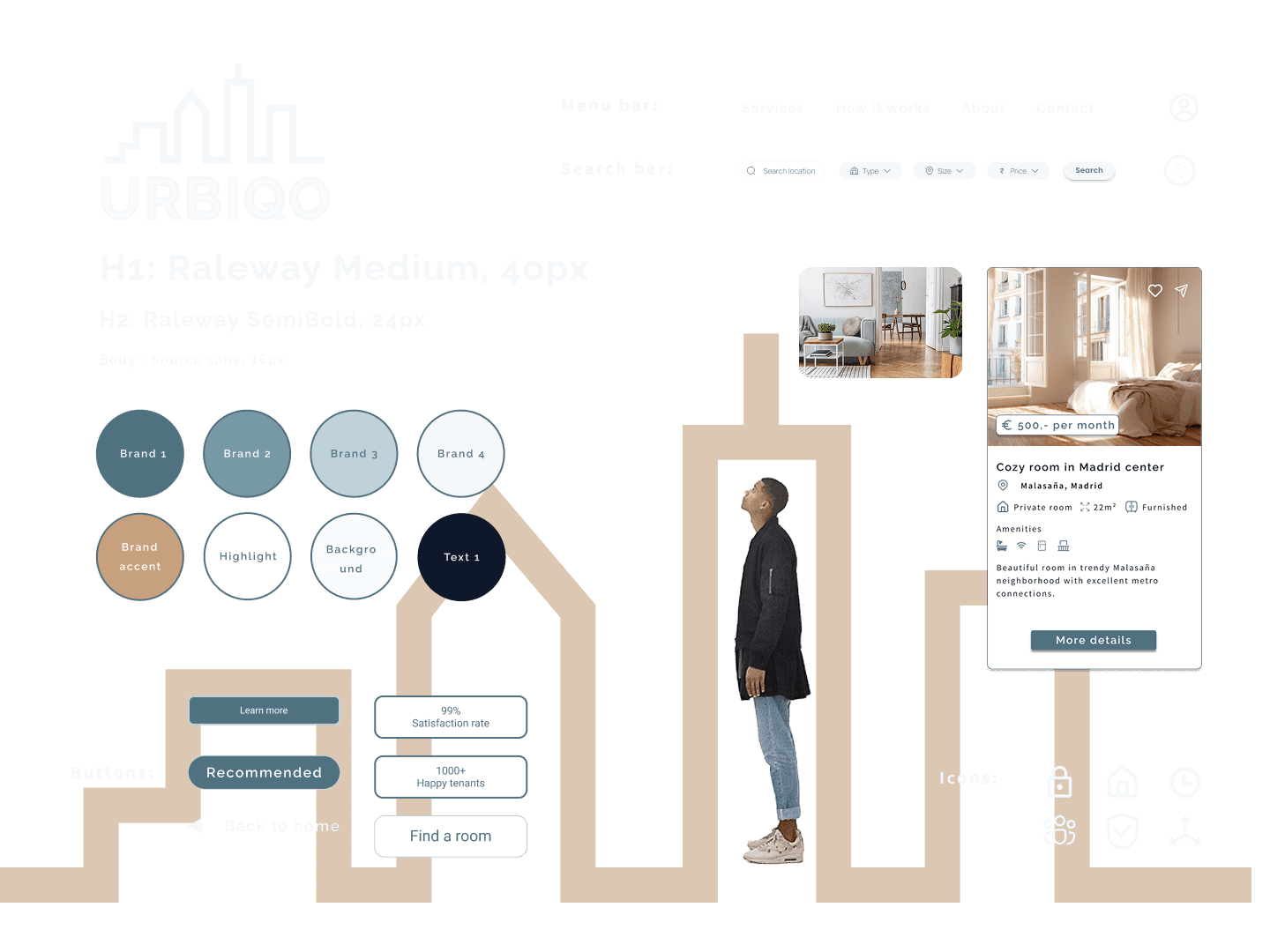
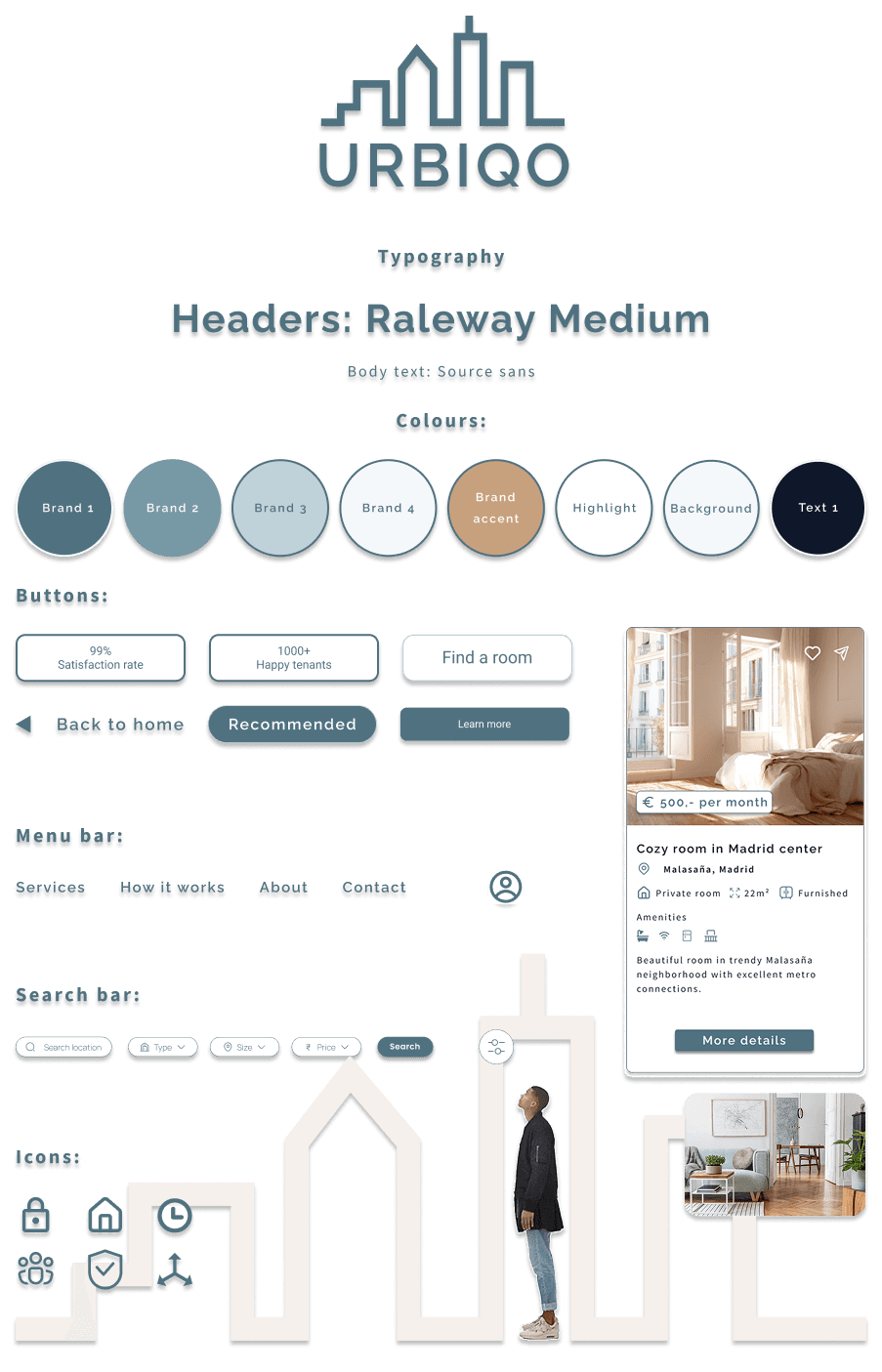
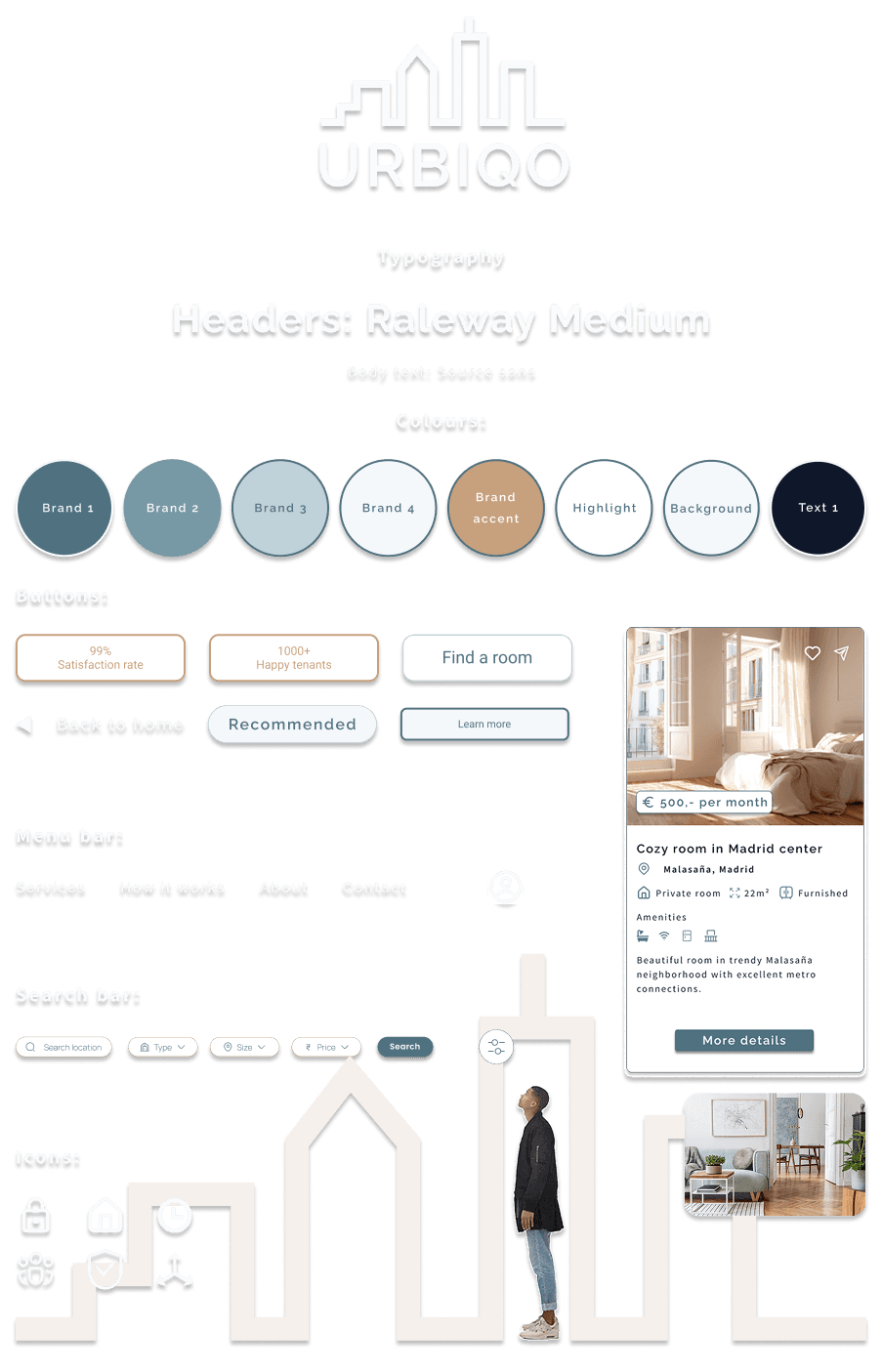
Tokens, components, variable theming for dark mode and English/Spanish localisation. Built alongside the product, kept as its own reference.
Design tokens
Variable modes
What I learned
This project is currently in development, with the launch targeted for the beginning of Q3 2026. That means there are no validated metrics yet, so I want to be honest about what this case study represents: product definition and design work, not measured outcomes.
Working on Urbiqo taught me three things:
First, designing for two-sided trust is fundamentally different from designing for a single user type. Every decision that reduces friction for tenants (fewer documents, faster verification) increases perceived risk for hosts. Balancing those tensions shaped the entire product structure.
Second, the gap between a founder's concept and a buildable product is larger than it looks. The founder had a clear vision for what Urbiqo should feel like. Translating that into conditional verification logic, system states and edge case handling was where most of the actual design work happened.
Third, I underestimated how much the visual design system would need to carry trust on its own. In a platform where users are sharing personal documents and financial information, every colour choice, every micro-interaction, every piece of copy either builds or erodes confidence. I'd spend more time on that layer if I were starting again.
Status & next steps
Q3 2026
Live release
10.000
Projection of listings 1st year
50.000
Growth goal 2027
The bet is that replacing rigid contract requirements with reputation-based signals will open the market for both sides. That's unproven until launch, but the logic holds: if you can verify reliability without demanding a permanent contract, you give hosts confidence and tenants access.
Witty Wolf Design
Madrid