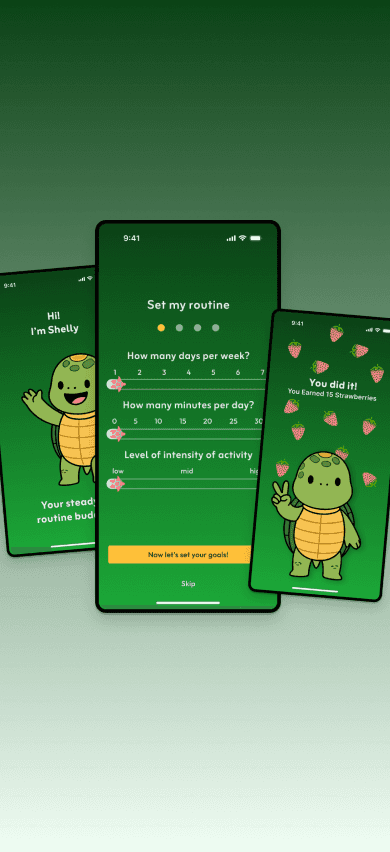
/
Shelly

Case Study · iOS Wellness App

Shelly: The Anti-Guilt Habit Builder

Helping busy urban professionals build sustainable health routines through flexibility, not pressure.

Client

Daily Health Conference

Role

UX/UI Designer (Bootcamp)
with Anna

UX/UI Designer (Bootcamp) with Anna

Timeline

4 Weeks (MVP)

Focus

Low Pressure Onboarding &
Statistics

Low Pressure Onboarding & Statistics

Context & Challenge

The Context:

The Daily Health Conference is a non-profit promoting wellness since 1983. Despite their expertise, they have been slow to catch up with technology and have seen a substantial drop in memberships. They need to modernize their image and offer more value to retain their community.

The Challenge:

How might we translate the Daily Health Conference's wellness expertise into a digital product that helps members adopt and commit to health-improving routines? The solution must address the fierce competition in the Health Tech space while adhering to strict data privacy (GDPR) standards.

The Objective:

To design a supportive mobile app that monitors user progress and encourages a healthier lifestyle through gentle nudges and habit tracking. The goal is to create a "fresh, updated image" for the client that revitalizes their membership offering.

The 'No Time' Barrier.

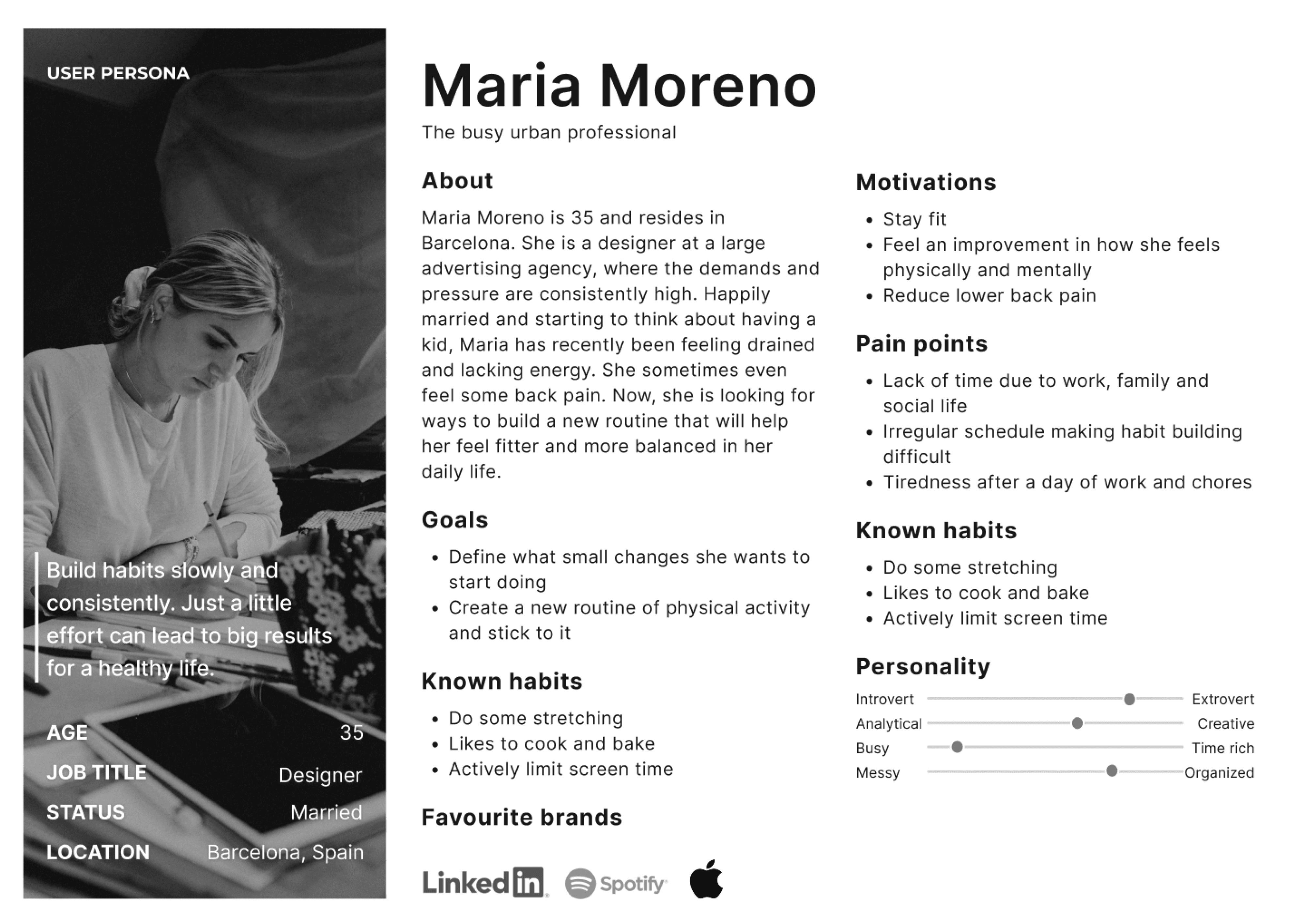
City life leaves no room for rigid wellness plans. Our research (16 participants) revealed a clear conflict:

94%

Want more physical activity.

63%

Cite mental health / stress as top concern.

25%

Cite work as the main barrier to routine.

Existing apps failed them by focusing on rigid streaks that induce guilt rather than reducing stress.

Existing apps failed them by focusing on rigid streaks that induce guilt rather than reducing stress.

Existing apps failed them by focusing on rigid streaks that induce guilt rather than reducing stress.

Designing for Self Compassion

The Solution

A 'Tortoise' philosophy: Slow, steady, flexible habits.

The Insight

Users abandon apps that judge them. Missing a streak feels like failure.

The Market Gap

61% of users prioritize mental well-being over physical metrics.
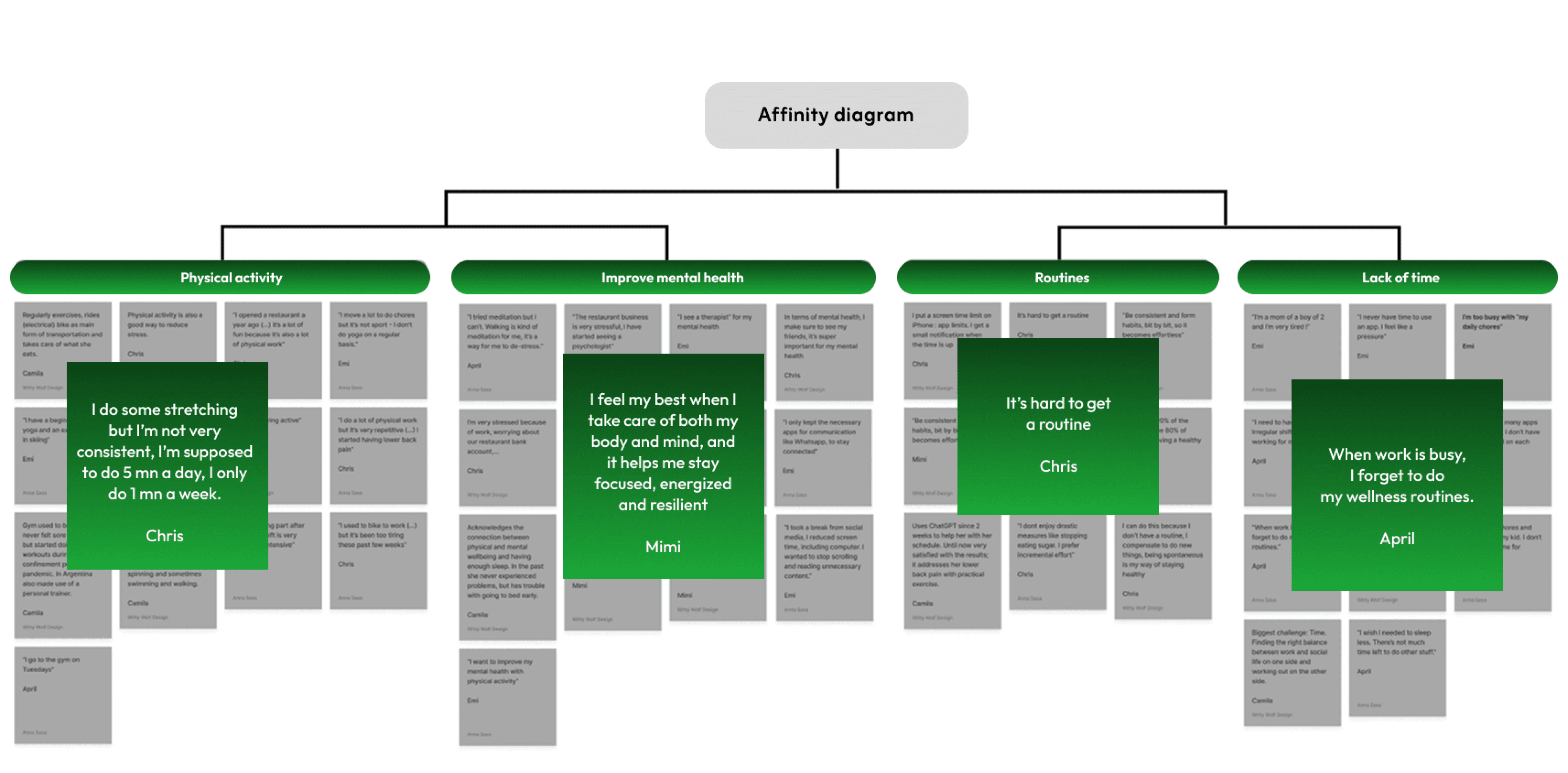
Affinity diagram organizing user research findings into four key pillars: 'Physical activity,' 'Improve mental health,' 'Routines,' and 'Lack of time.' Green sticky notes highlight key user quotes, such as 'When work is busy, I forget to do my wellness routines,' identifying the core conflict between stress and healthy habits.
https://wittywolf.design/work/shelly

Design Solutions

01

Flexibility

Adaptive Scheduling

Because Maria's schedule is irregular, we designed 'Adaptive Scheduling' to adjust to her, not the other way around.

Personalization

User Control
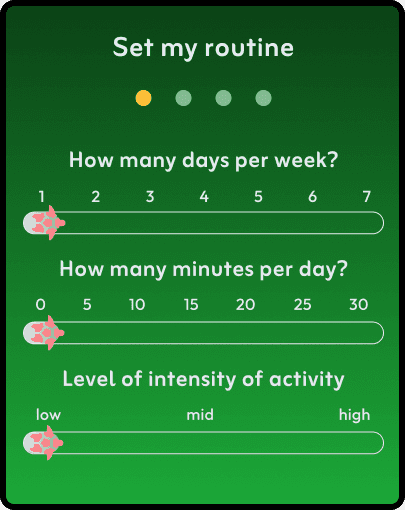
Mobile UI screen demonstrating the 'Adaptive Scheduling' feature. The interface asks the user 'How is your day looking?' and offers flexible options to adjust goals based on their energy levels.
Progress tracking screen featuring a visual path that grows with the user. Instead of red 'X's for broken streaks, the design uses a gentle, continuous line populated by the Shelly mascot to reinforce positive momentum.

02

Positive Reinforcement

Visualizing Progress

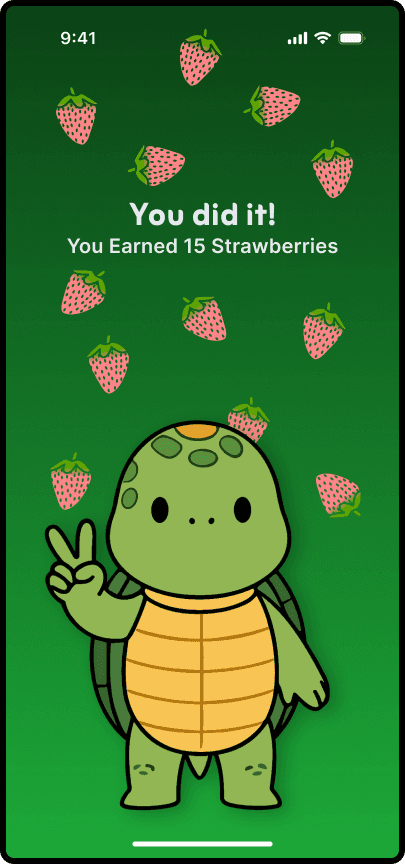
Replaced 'broken streaks' (red X's) with a gentle visual path. The mascot (Shelly) grows with you, reinforcing positive feedback even on slow days.

Gamification

03

Support

Contextual Nudges

Micro-coaching that adapts to the user's state. Stressed? Shelly suggests a breathing exercise. Energetic? Shelly suggests a run.

Context Aware

Micro-Coaching
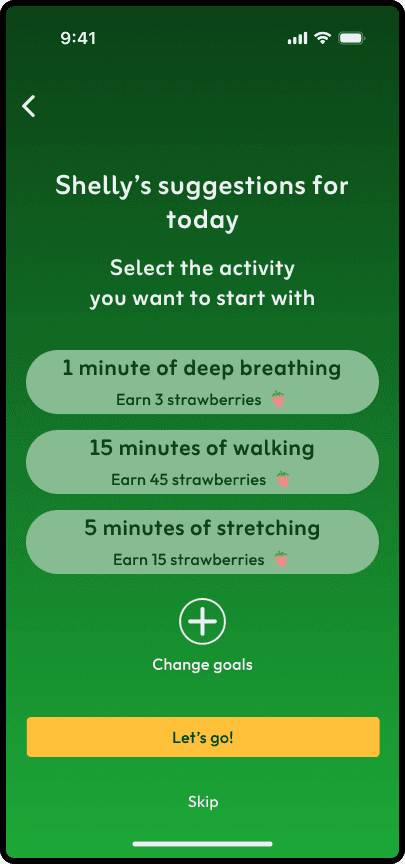
Notification and interaction screen showing a 'Micro-coaching' moment. The app detects the user is stressed and suggests a quick breathing exercise instead of a high-intensity workout.

Optimism & Calm

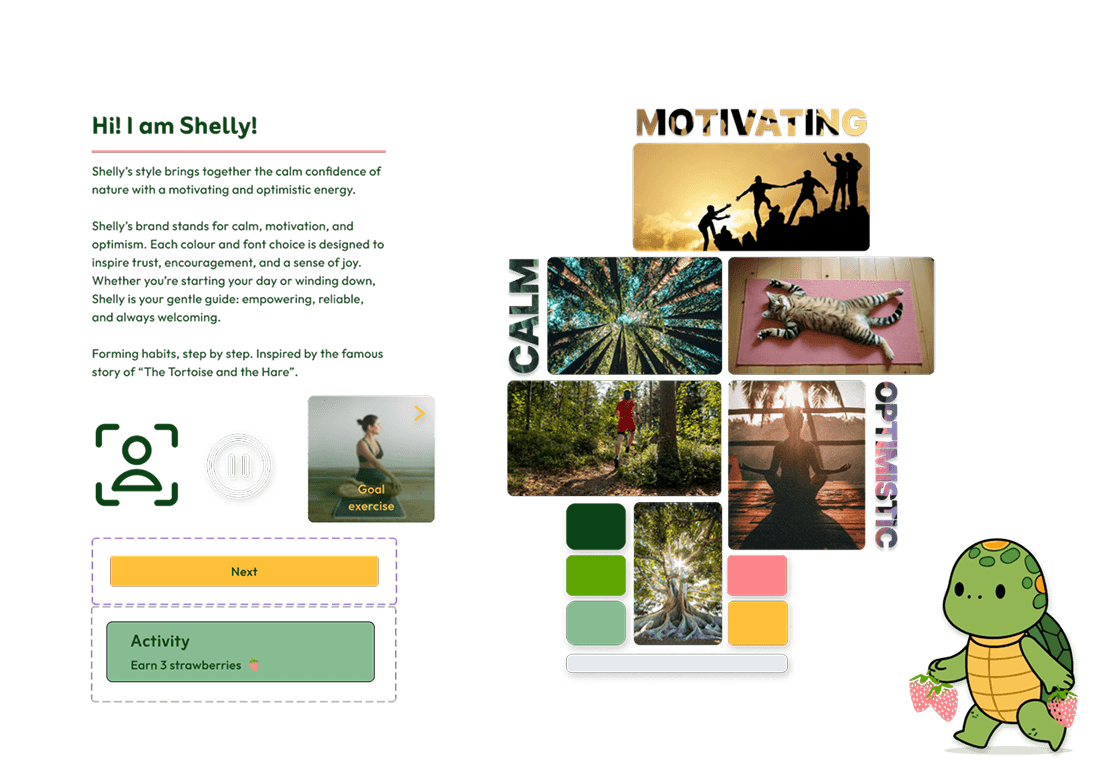
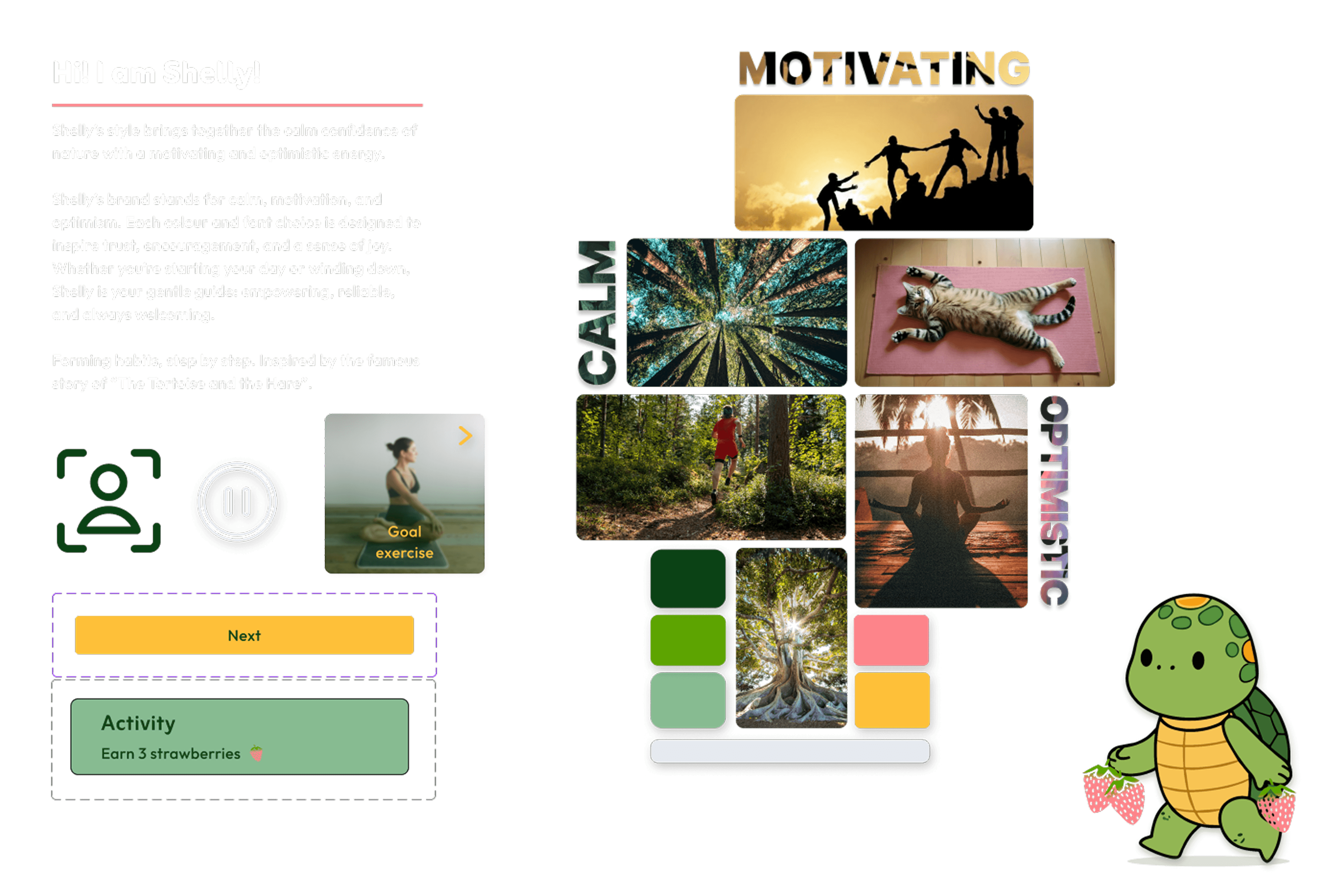
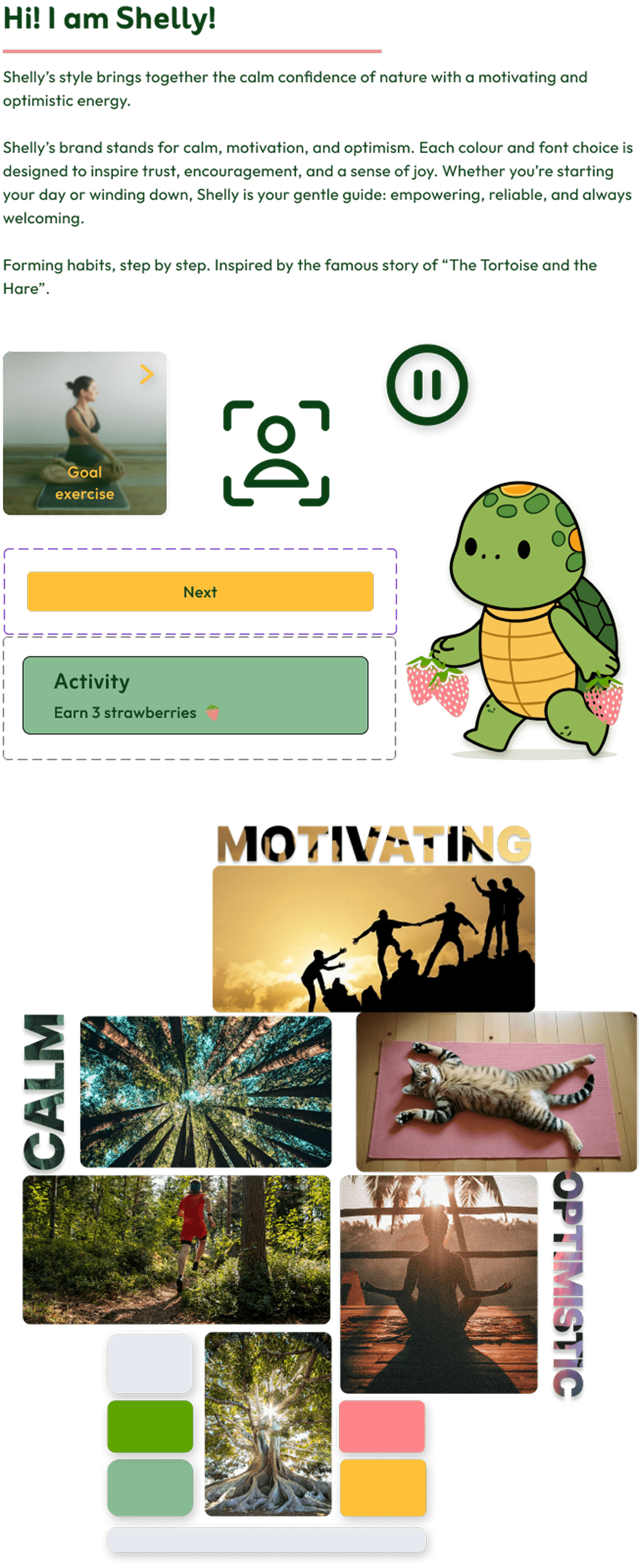
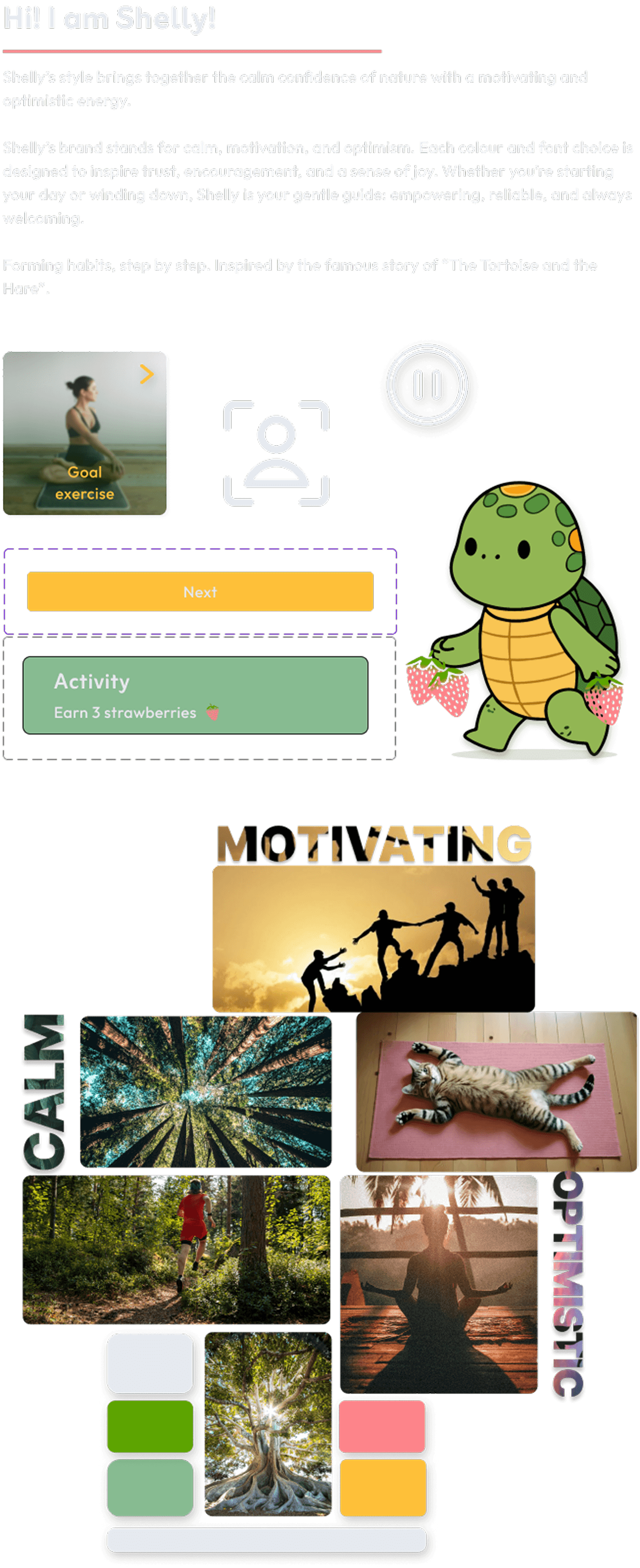
A visual identity built on nature-inspired greens and warm yellows. The typography and rounded UI elements were designed to lower cognitive load and reduce anxiety.
Light imageDark image
Visual identity board for the Shelly app. It displays the nature-inspired color palette of calming greens and warm yellows, alongside the rounded, approachable typography selected to reduce cognitive load.Visual identity board for the Shelly app. It displays the nature-inspired color palette of calming greens and warm yellows, alongside the rounded, approachable typography selected to reduce cognitive load.
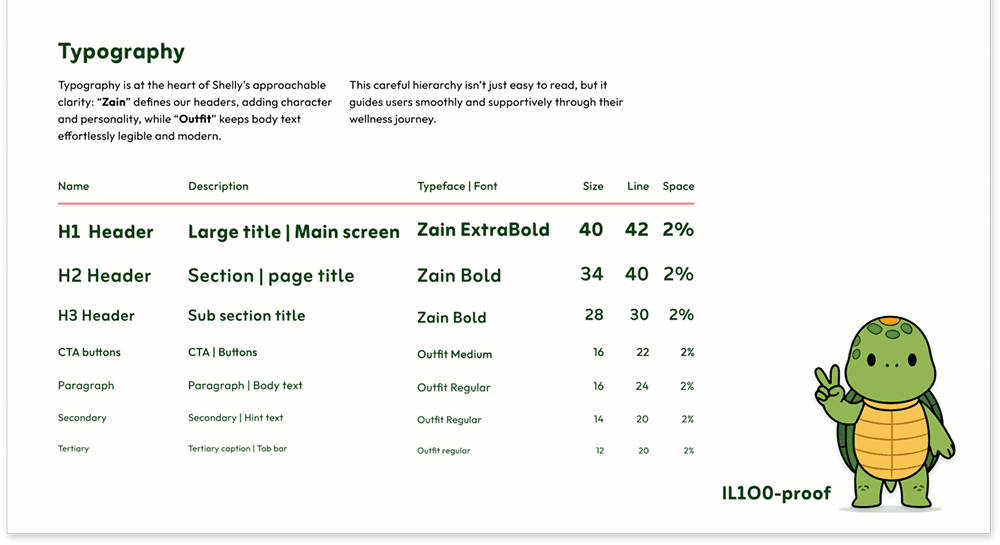
Typography guide for the Shelly app alongside the 'Shelly' turtle mascot giving a peace sign. It details the use of 'Zain ExtraBold' for approachable headers and 'Outfit' for legible body text to ensure a modern, supportive reading experience.Typography guide for the Shelly app alongside the 'Shelly' turtle mascot giving a peace sign. It details the use of 'Zain ExtraBold' for approachable headers and 'Outfit' for legible body text to ensure a modern, supportive reading experience.
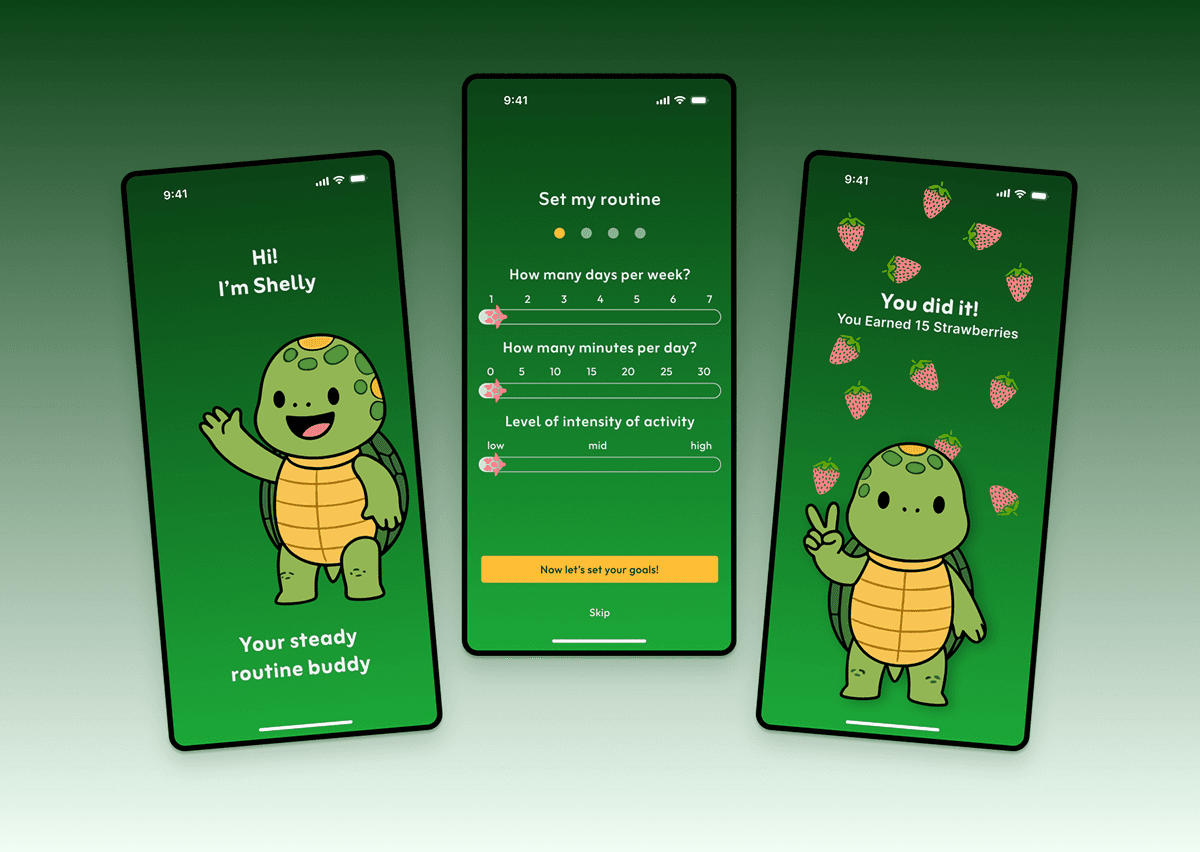
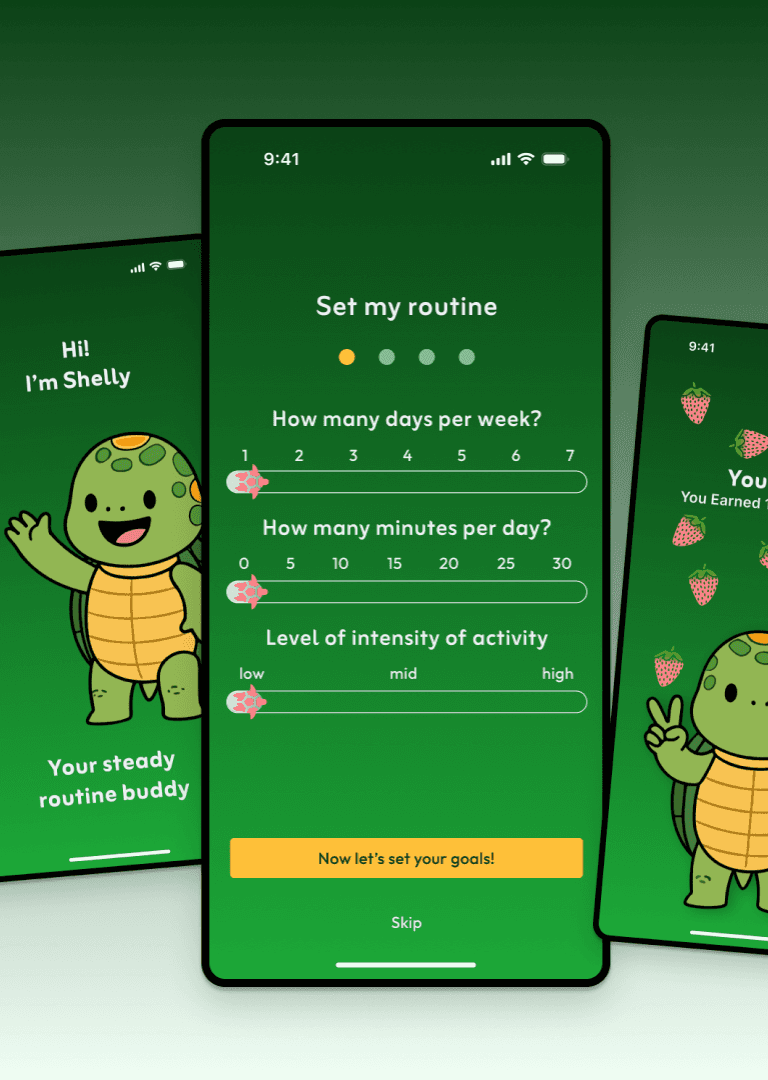
High-fidelity mockups of the Shelly app in both Light and Dark modes. The screens show consistency in the calming aesthetic, ensuring the app remains easy on the eyes during evening use.

Impact & Project Reflections

100%

Positive sentiments

-40%

Finished flow usability tests

Emotional engagement

Quote from user after the final round of usability tests:
“Finally an app that feels like a friend" as the text inside the Orange Bar area.”

Interested in how user research shapes design strategy?

Interested in how user research shapes design strategy?

Let's talk about your next project.

Witty Wolf Design

By Marco Ramos
By Marco Ramos
By Marco Ramos
Copyright Witty Wolf Design 2025